Contact Us

Use the form on the right to contact us.

You can edit the text in this area, and change where the contact form on the right submits to, by entering edit mode using the modes on the bottom right. 


123 Street Avenue, City Town, 99999

(123) 555-6789

email@address.com


You can set your address, phone number, email and site description in the settings tab.
Link to read me page with more information.

Blog

4 Questions with Lillian Faderman

Rebecca Keys

 
4-questions-yellow (002).jpg
 
Faderman.jpg

This month, Lillian Faderman, a distinguished scholar of LGBT history, and author of the Jewish Lives biography Harvey Milk: His Lives and Death, answers 4 questions about the Jewish experience.

1. In your opinion, what is the defining feature of Jewish life today?

The defining feature at present is one that worries me a great deal because it’s truly divisive for our community: and that’s the passionate disagreements over Israel. As an academic, I’m concerned that so many Jewish college students, and faculty as well, are not nuanced in their criticisms of the Israeli government. They’re hostile to, or dismissive of, the country. They have little sense of the history of why it came into being as a life raft--too late for six million, but there if (or rather, as history would suggest, when) virulent anti-Semitism rears its head again. I’m especially bothered that young American Jews are sometimes in the forefront of their campuses’ BDS movement and don’t do enough to challenge the anti-Semitism that is too often connected with criticism of the Jewish state.

2. What is your favorite Jewish book and why?

There are so many Jewish books that are important to me, but if I had to pick just one I would choose a collection of stories by Bernard Malamud, The Magic Barrel, which was published in 1958. Malamud wasn’t as cerebral as Saul Bellow, and he certainly wasn’t as hip as contemporary writers such as Michael Chabon; but he captured a generation that I knew well from my childhood, and I love him for it. I’ve reread the Magic Barrel stories even in recent years, and they continue to move me. I like the way Malamud gets the Yiddish idiom so right in the voices of his immigrant Jewish characters—I can hear my own immigrant mother and aunt in those voices. I like the ethical issues his stories raise too. He’s concerned with questions about, for instance, the responsibility we have for one another—and he always complicates the answers so interestingly.

3. What do you think Jewish life will look like in 100 years from now?

As a female who in the mid-20th century became part of the group that we now call LGBT, I remember very well how things used to be—and I’m astonished and happy about how they’ve changed. Liberal Judaism has opened up in recent decades to the leadership of women and the presence of out LBGT people. That women can lead congregations, that out LGBT people are now welcome in most reform, reconstructionist, even many conservative synagogues—such expansion of the active Jewish community bodes well for future growth. It also bodes well for “100 years from now” that liberal Judaism has become increasingly vocal in recognizing and welcoming Jews of color. That helps insure that Judaism will continue to grow and that diverse Jews will continue to play a part in the Jewish community.

Another factor (not so happy), that will inevitably impact Jewish life in the future is the perennial sickness of anti-Semitism. Not only history but recent events too demonstrate that anti-Semitism is as regenerative and many-headed as Hydra. If Jews 100 years from now, through assimilation or whatever, forget their Jewishness anti-Semites will remind them.

4. If you could meet any figure from Jewish history, who would it be and why?

If I had to choose just one figure, it would be the man I wrote about for the Jewish Lives series, Harvey Milk. In the course of my research for the book, I discovered all Harvey’s many warts, and I didn’t hold back on revealing them. But I also discovered the ways in which he was big-hearted and brave and truly a mensch. And I grew to love him for his complex humanity. I also grew to admire him deeply for how he crafted the person he became and how he inspired. It may be exaggerating to say that Harvey Milk was the LGBT community’s Martin Luther King—after all, he didn’t live long enough in the public eye to garner the huge national platform that King did. But for huge masses of us, Harvey Milk is the closest thing the LGBT community has ever had to a larger-than-life hero.

Who was Menasseh ben Israel?

Rebecca Keys

His father was tortured by the Inquisition…
His family was forcibly converted to Christianity…
Yet he became the most famous Jew of the 17th century.

Illustration by Sefira Lightstone

Illustration by Sefira Lightstone

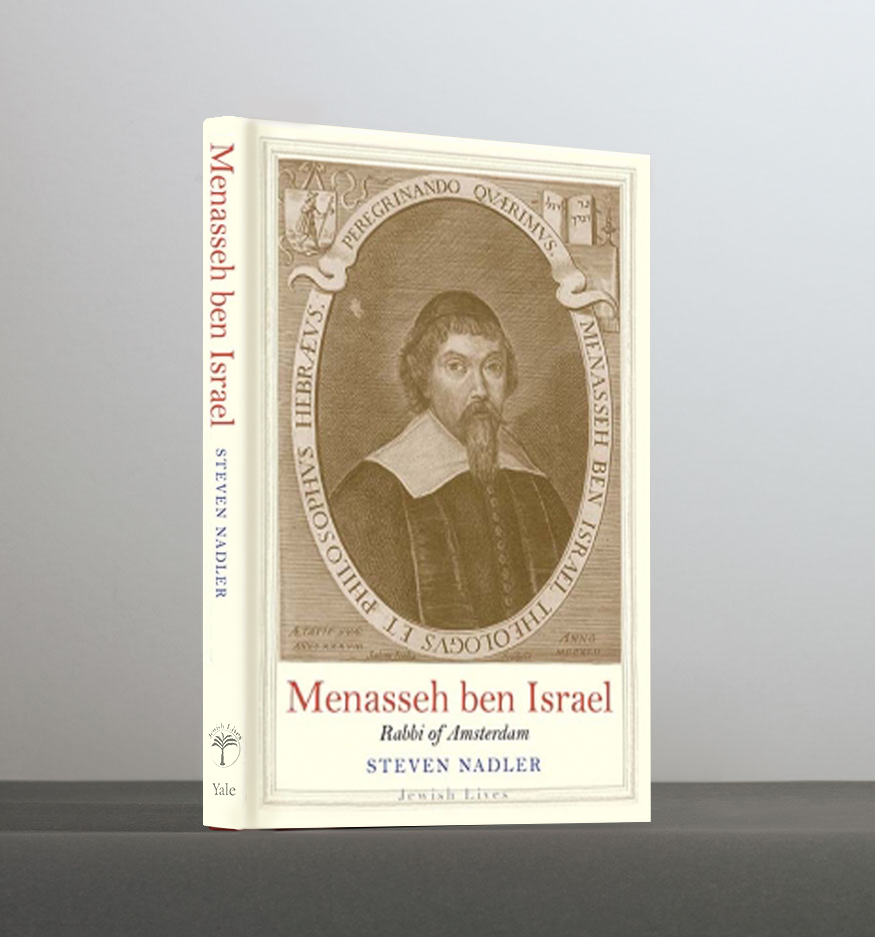
Menasseh ben Israel: Rabbi of Amsterdam
$26.00

By Steven Nadler
Published August 21, 2018
312 pages

“Truly excellent” —Jonathan Israel

An illuminating biography of the great Amsterdam rabbi and celebrated popularizer of Judaism in the seventeenth century

Menasseh ben Israel (1604–1657) was among the most accomplished and cosmopolitan rabbis of his time, and a pivotal intellectual figure in early modern Jewish history. He was one of the three rabbis of the “Portuguese Nation” in Amsterdam, a community that quickly earned renown worldwide for its mercantile and scholarly vitality.

Born in Lisbon, Menasseh and his family were forcibly converted to Catholicism but suspected of insincerity in their new faith. To avoid the horrors of the Inquisition, they fled first to southwestern France, and then to Amsterdam, where they finally settled. Menasseh played an important role during the formative decades of one of the most vital Jewish communities of early modern Europe, and was influential through his extraordinary work as a printer and his efforts on behalf of the readmission of Jews to England. In this lively biography, Steven Nadler provides a fresh perspective on this seminal figure.

SAVE 40% + FREE SHIPPING!
Use code MENASSEH at checkout.

Menasseh ben Israel (1604–1657) was among the most accomplished and cosmopolitan rabbis of his time, and a pivotal intellectual figure in early modern Jewish history.

He was a teacher of Baruch Spinoza. He argued for the Jewish resettlement of England, from which Jews had been banned since 1290. He founded the first Hebrew printing press in Amsterdam.

Learn more about the great Amsterdam rabbi and celebrated popularizer of Judaism with Jewish Lives.

____________________________________

REVIEWS

“In this lucid and engaging biography, Menasseh ben Israel emerges as a force of nature, moving swiftly and easily between the Jewish and Gentile spheres in Amsterdam. In recreating Menasseh's life, Nadler has stitched together some of the leading figures of the century into a vivid tapestry.” —Russell Shorto, author of The Island at the Center of the World

"Fluidly written, lively, and truly excellent from every point of view, this book portrays Menasseh's role in the development of Amsterdam Jewish life and learning and in the broad context of seventeenth-century Jewish-Christian intellectual relations." —Jonathan Israel, Institute for Advanced Study, Princeton

"Excellent." —Rabbi A. James Rudin, Reform Judaism


FREE READING GUIDE

Jewish Life of the Month: Jerome Robbins

Rebecca Keys

6-JEWISH-LIFE-OF-THE-MONTH2 (002).jpg
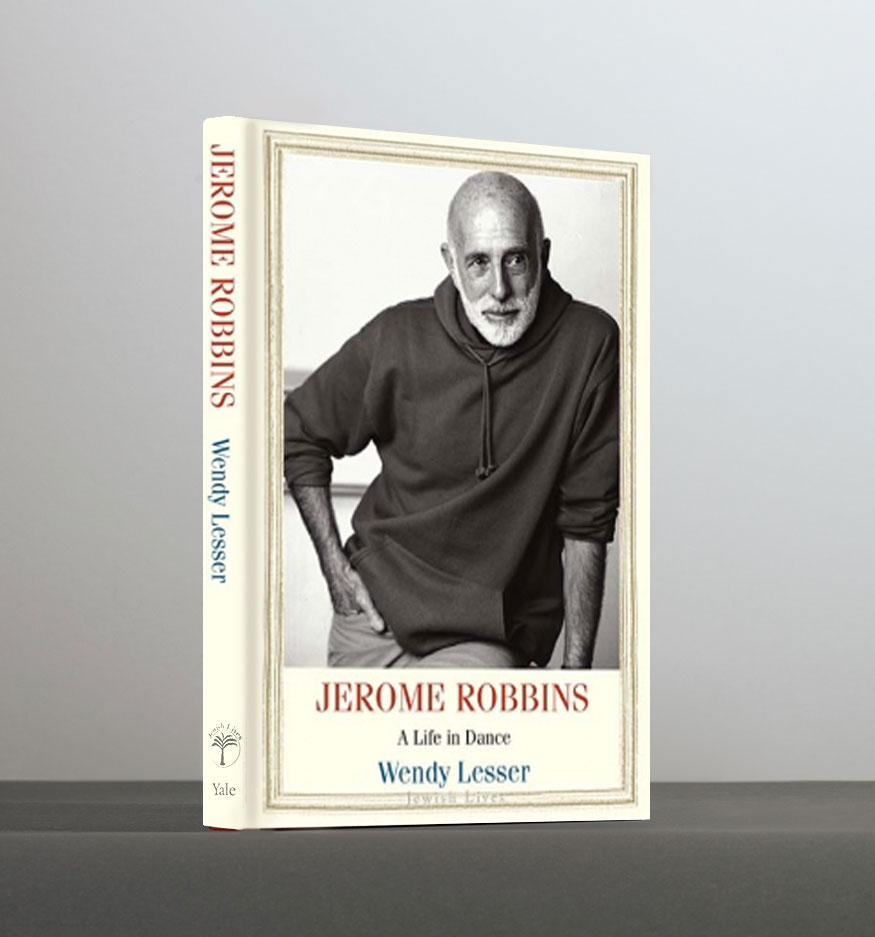
Jerome Robbins: A Life in Dance
$26.00

By Wendy Lesser
Published October, 9, 2018
216 pages

“A compact and incisive portrait” —Kirkus Reviews

A lively and inspired biography celebrating the centennial of this master choreographer, dancer, and stage director

Jerome Robbins (1918–1998) was born Jerome Wilson Rabinowitz and grew up in Weehawken, New Jersey, where his Russian-Jewish immigrant parents owned the Comfort Corset Company. Robbins, who was drawn to dance at a young age, resisted the idea of joining the family business. In 1936 he began working with Gluck Sandor, who ran a dance group and convinced him to change his name to Jerome Robbins. He went on to become a choreographer and director who worked in ballet, on Broadway, and in film. His stage productions include West Side Story, Peter Pan, and Fiddler on the Roof. In this deft biography, Wendy Lesser presents Jerome Robbins’s life through his major dances, providing a sympathetic, detailed portrait of her subject.

Jerome Robbins

Dates
1918-1998

Impact
A legendary choreographer, five-time Tony Award-winner, and two-time Academy Award-winner, Jerome Robbins is best known for his work on Peter Pan, The King And I, West Side Story, and Fiddler on the Roof.

Famous Quote
“I can’t sit still and direct a ballet. I have to get the feeling of the movement, then I can tell where it ought to go."

Get to Know Julius Rosenwald

Rebecca Keys

Image courtesy of Wikimedia Commons

Image courtesy of Wikimedia Commons

Did you know that Julius Rosenwald funded the construction of over 5,000 schools for African American children in the rural south in the early 20th century?

Learn more about the businessman-turned-philanthropist with Jewish Lives and check out the new discussion guide featuring Rosenwald produced by the Jewish Book Council (see page 26).

 
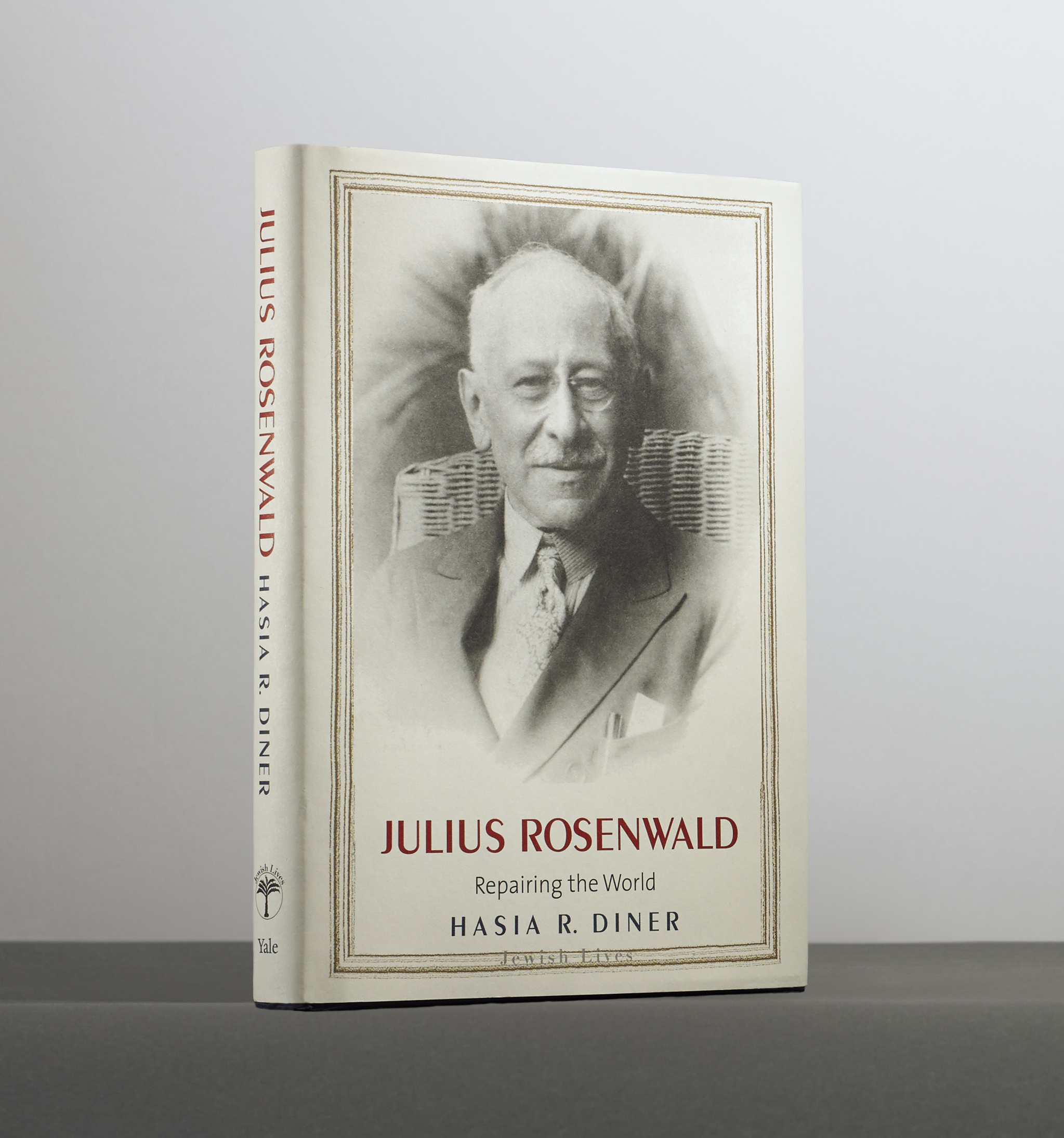
Julius Rosenwald: Repairing the World
$26.00

By Hasia R. Diner
Published October 24, 2017
256 pages

“A masterpiece” —David Levering Lewis

The portrait of a humble retail magnate whose visionary ideas about charitable giving transformed the practice of philanthropy in America and beyond

Julius Rosenwald (1862–1932) rose from modest means as the son of a peddler to meteoric wealth at the helm of Sears, Roebuck. Yet his most important legacy stands not upon his business acumen but on the pioneering changes he introduced to the practice of philanthropy. While few now recall Rosenwald’s name—he refused to have it attached to the buildings, projects, or endowments he supported—his passionate support of Jewish and African American causes continues to influence lives to this day.

This biography of Julius Rosenwald explores his attitudes toward his own wealth and his distinct ideas about philanthropy, positing an intimate connection between his Jewish consciousness and his involvement with African Americans. The book shines light on his belief in the importance of giving in the present to make an impact on the future, and on his encouragement of beneficiaries to become partners in community institutions and projects. Rosenwald emerges from the pages as a compassionate man whose generosity and wisdom transformed the practice of philanthropy itself.


Celebrate the 100th Anniversary of Dance Icon Jerome Robbins

Rebecca Keys

Jerome_Robbins_GIF (002).gif

SAVE 30% + FREE SHIPPING!
Use code DANCE at checkout.

Jerome Robbins: A Life in Dance
$26.00

By Wendy Lesser
Published October, 9, 2018
216 pages

“A compact and incisive portrait” —Kirkus Reviews

A lively and inspired biography celebrating the centennial of this master choreographer, dancer, and stage director

Jerome Robbins (1918–1998) was born Jerome Wilson Rabinowitz and grew up in Weehawken, New Jersey, where his Russian-Jewish immigrant parents owned the Comfort Corset Company. Robbins, who was drawn to dance at a young age, resisted the idea of joining the family business. In 1936 he began working with Gluck Sandor, who ran a dance group and convinced him to change his name to Jerome Robbins. He went on to become a choreographer and director who worked in ballet, on Broadway, and in film. His stage productions include West Side Story, Peter Pan, and Fiddler on the Roof. In this deft biography, Wendy Lesser presents Jerome Robbins’s life through his major dances, providing a sympathetic, detailed portrait of her subject.

Explore Jerome Robbins' extraordinary body of work, bridging together Broadway and ballet like no other choreographer before or since.

Learn more in the new Jewish Lives biography JEROME ROBBINS: A LIFE IN DANCE, by Wendy Lesser

_________________________________________

REVIEWS

"This brisk biography . . . is light and bright, utterly persuaded by its subject and intoxicatingly in love with movement." —New York Times Book Review

“Wendy Lesser’s new biography deftly introduces readers to her complex subject and his many remarkable creative achievements.” —The Wall Street Journal

“Lesser. . . inspires. . .” —Pam Tanowitz

“This book answers questions I didn’t know I had. It is a fascinating and generous point of view.” —Mark Morris

JR-2.jpg
JR-1-5.jpg

Free Educator's Guide

Rebecca Keys

1-FREE EDUCATOR¹S GUIDE (002).jpg

We're pleased to share a free educator's guide to enrich student learning around the legacy of Harvey Milk.

The educator's guide was created in partnership with Keshet, a national organization 
that works for full LGBTQ equality and inclusion in Jewish life.

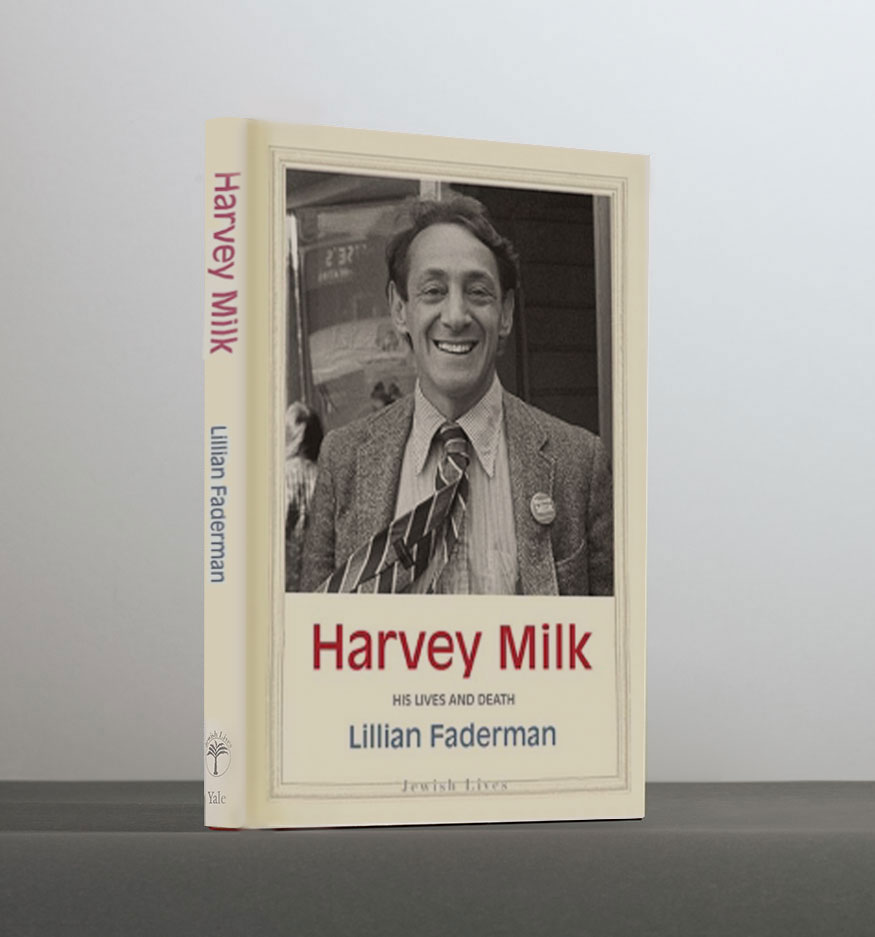
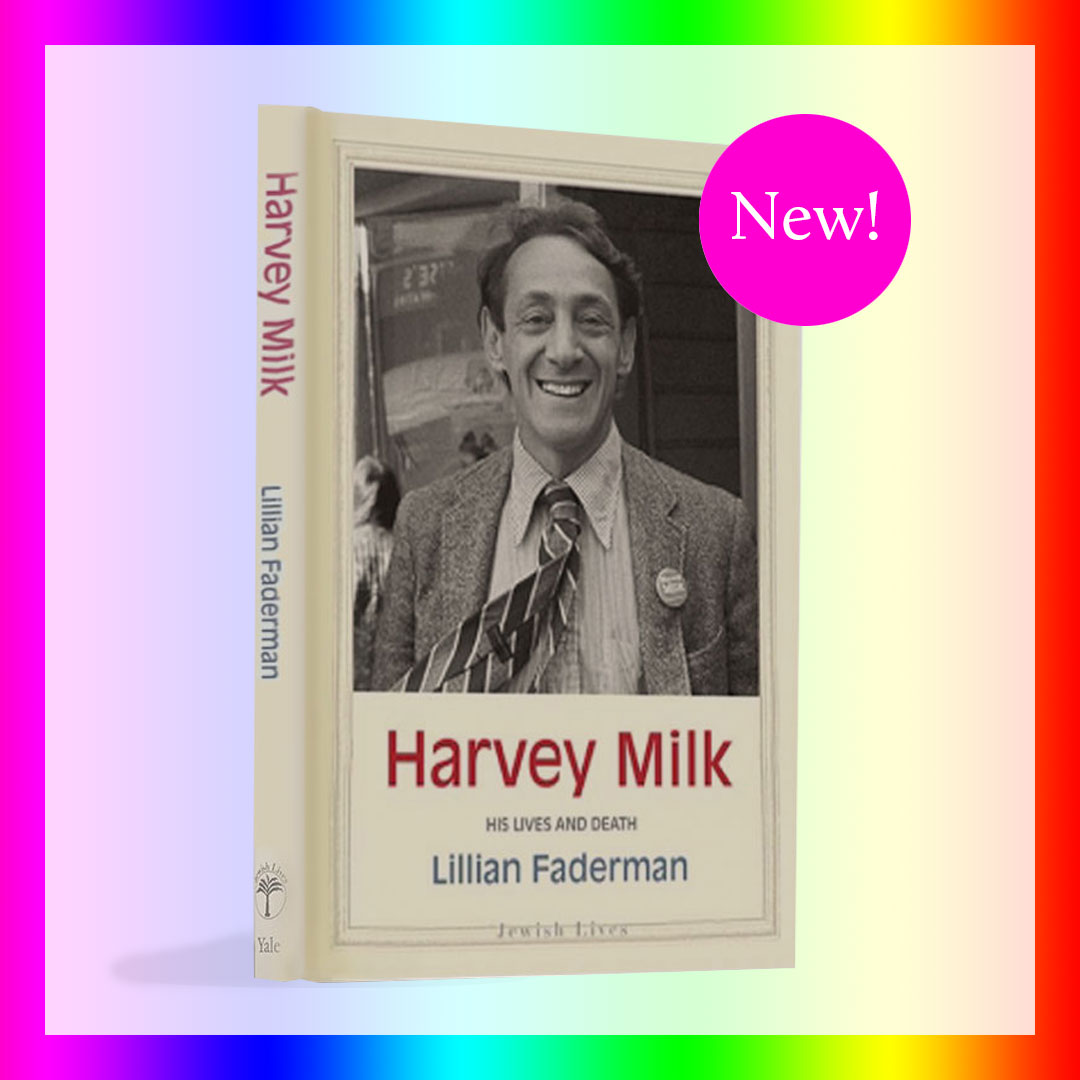
Harvey Milk: His Lives and Death
$26.00

By Lillian Faderman
Published May 22, 2018
204 pages

"Compelling" —The Washington Post

A lively and engaging biography of the first openly gay man elected to public office in the United States, a man fiercely committed to protecting all minorities

Harvey Milk—eloquent, charismatic, and a smart-aleck—was elected to the San Francisco Board of Supervisors in 1977, but he had not even served a full year in office when he was shot by a homophobic fellow supervisor. Milk’s assassination at the age of forty-eight made him the most famous gay man in modern history; twenty years later Time magazine included him on its list of the hundred most influential individuals of the twentieth century.

Before finding his calling as a politician, however, Harvey variously tried being a schoolteacher, a securities analyst on Wall Street, a supporter of Barry Goldwater, a Broadway theater assistant, a bead-wearing hippie, the operator of a camera store and organizer of the local business community in San Francisco. He rejected Judaism as a religion, but he was deeply influenced by the cultural values of his Jewish upbringing and his understanding of anti-Semitism and the Holocaust. His early influences and his many personal and professional experiences finally came together when he decided to run for elective office as the forceful champion of gays, racial minorities, women, working people, the disabled, and senior citizens. In his last five years, he focused all of his tremendous energy on becoming a successful public figure with a distinct political voice.

Jewish Life of the Month: Menasseh ben Israel

Rebecca Keys

Image courtesy of Wikimedia Commons

Image courtesy of Wikimedia Commons

Menasseh ben Israel: Rabbi of Amsterdam
$26.00

By Steven Nadler
Published August 21, 2018
312 pages

“Truly excellent” —Jonathan Israel

An illuminating biography of the great Amsterdam rabbi and celebrated popularizer of Judaism in the seventeenth century

Menasseh ben Israel (1604–1657) was among the most accomplished and cosmopolitan rabbis of his time, and a pivotal intellectual figure in early modern Jewish history. He was one of the three rabbis of the “Portuguese Nation” in Amsterdam, a community that quickly earned renown worldwide for its mercantile and scholarly vitality.

Born in Lisbon, Menasseh and his family were forcibly converted to Catholicism but suspected of insincerity in their new faith. To avoid the horrors of the Inquisition, they fled first to southwestern France, and then to Amsterdam, where they finally settled. Menasseh played an important role during the formative decades of one of the most vital Jewish communities of early modern Europe, and was influential through his extraordinary work as a printer and his efforts on behalf of the readmission of Jews to England. In this lively biography, Steven Nadler provides a fresh perspective on this seminal figure.

Menasseh ben Israel

Dates
1604-1657

Impact
A pivotal intellectual figure in early modern Jewish history, Menasseh ben Israel was a rabbi and founder of the first Hebrew printing press in Amsterdam. His most famous student was Baruch Spinoza.

Famous Quote
"Now, as if in total neglect of myself, I am engaged in trade; which is not only difficult and full of trouble, but also costs me a good deal of time that I would otherwise devote to my studies. But what else am I to do? I have neither the wealth of Croesus nor the soul of Thersites."

A Rare Interview with a Celebrated Playwright

Rebecca Keys

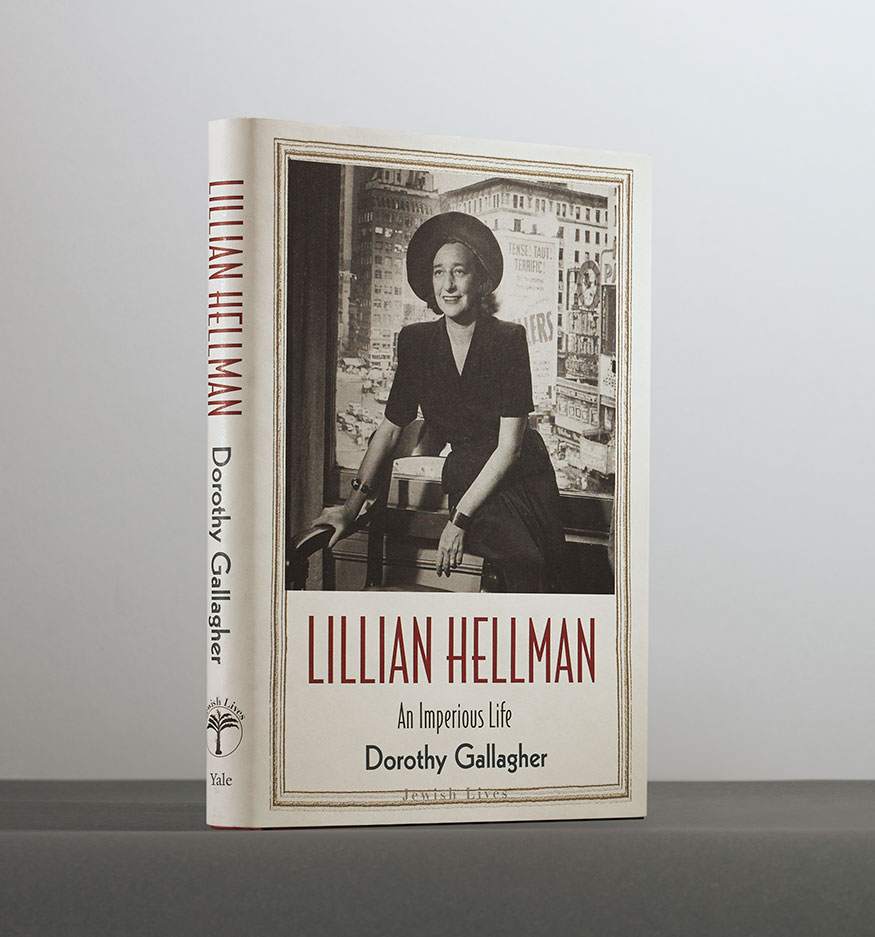
Lillian Hellman: An Imperious Life
$26.00

By Dorothy Gallagher
Published January 28, 2014
184 pages

“Sharp-edged, darkly humorous” —Kirkus Reviews

Glamorous, talented, audacious—Lillian Hellman knew everyone, did everything, had been everywhere. By the age of twenty-nine she had written The Children’s Hour, the first of four hit Broadway plays, and soon she was considered a member of America’s first rank of dramatists, a position she maintained for more than twenty-five years. Apart from her literary accomplishments—eight original plays and three volumes of memoirs—Hellman lived a rich life filled with notable friendships, controversial political activity, travel, and love affairs, most importantly with Dashiell Hammett. But by the time she died, the truth about her life and works had been called into question. Scandals attached to her name, having to do with sex, with money, and with her own veracity.

Dorothy Gallagher confronts the conundrum that was Lillian Hellman—a woman with a capacity to inspire outrage as often as admiration. Exploring Hellman’s leftist politics, her Jewish and Southern background, and her famous testimony before the House Un-American Activities Committee, Gallagher also undertakes a new reading of Hellman’s carefully crafted memoirs and plays, in which she is both revealed and hidden. Gallagher sorts through the facts and the myths, arriving at a sharply drawn portrait of a woman who lived large to the end of her remarkable life and never backed down from a fight.

Watch acclaimed playwright Lillian Hellman discuss her life and career, which included such classic plays as "The Children's Hour" and "The Little Foxes," and her long relationship with mystery writer Dashiell Hammett, in this rare TV interview from 1973.

Learn more about Hellman's legendary career with Jewish Lives.

4 Questions with Steven Nadler

Rebecca Keys

 
4-questions-teal (002).jpg
 

This month Steven Nadler, a Pulitzer Prize finalist and author of the new Jewish Lives biography Menasseh ben Israel: Rabbi of Amsterdam, will answer 4 questions about the Jewish experience.

Steven Nadler.jpg

1. In your opinion, what is the defining feature of Jewish life today?

If the question is “What does it mean to be Jewish today?”, I would have to say that it is a matter of seeing oneself as belonging a particular (and particularly extended) “family", of identifying with a certain religious (but not necessarily observant), political, moral, literary and social history. On the other hand, if the question is “What most clearly characterizes Jewish life today?”, I’m afraid my answer — at least from my perspective within Jewish life —  would be “division”: between different branches of Judaism (especially orthodox and non-orthodox), between political camps (especially with regard to Israel), between Jews in the diaspora and those in Israel, and between generations.

2. What is your favorite Jewish book and why?

For non-fiction, there is Maimonides’ Guide of the Perplexed, which I find endlessly perplexing, and Spinoza’s Theological-Political Treatise (yes, it is a Jewish book!), because it basically gets it all right. Under fiction, stories by Sholem Aleichem, S. Y. Abramovitsh and I. B. Singer, Mordecai Richler’s The Apprenticeship of Duddy Kravitz (in fact, anything by Richler), Michael Chabon’s The Amazing Adventures of Kavalier and Clay (one of the great American novels of the last 50 years), and anything by Shalom Auslander.  

3. What do you think Jewish life will look like in 100 years from now?

Unless we find a way to heal the current divisions, Jewish life in 100 years will not be a pretty picture; there may not even be something that can be identified in the singular as “Jewish life” (and maybe there isn’t such a thing now).

4. If you could meet any figure from Jewish history, who would it be and why?

Spinoza.  There’s a couple of things I’d like him to clear up.

Jewish Life of the Month: Leon Trotsky

Rebecca Keys

Image courtesy of Wikimedia Commons

Image courtesy of Wikimedia Commons

Leon Trotsky

Dates
1879-1940

Impact
A preeminent Russian revolutionary figure and a masterful writer, Leon Trotsky led an upheaval that helped to define the contours of twentieth-century politics.

Famous Quote
"The masses go into a revolution not with a prepared plan of social reconstruction, but with a sharp feeling that they cannot endure the old regime." 

 
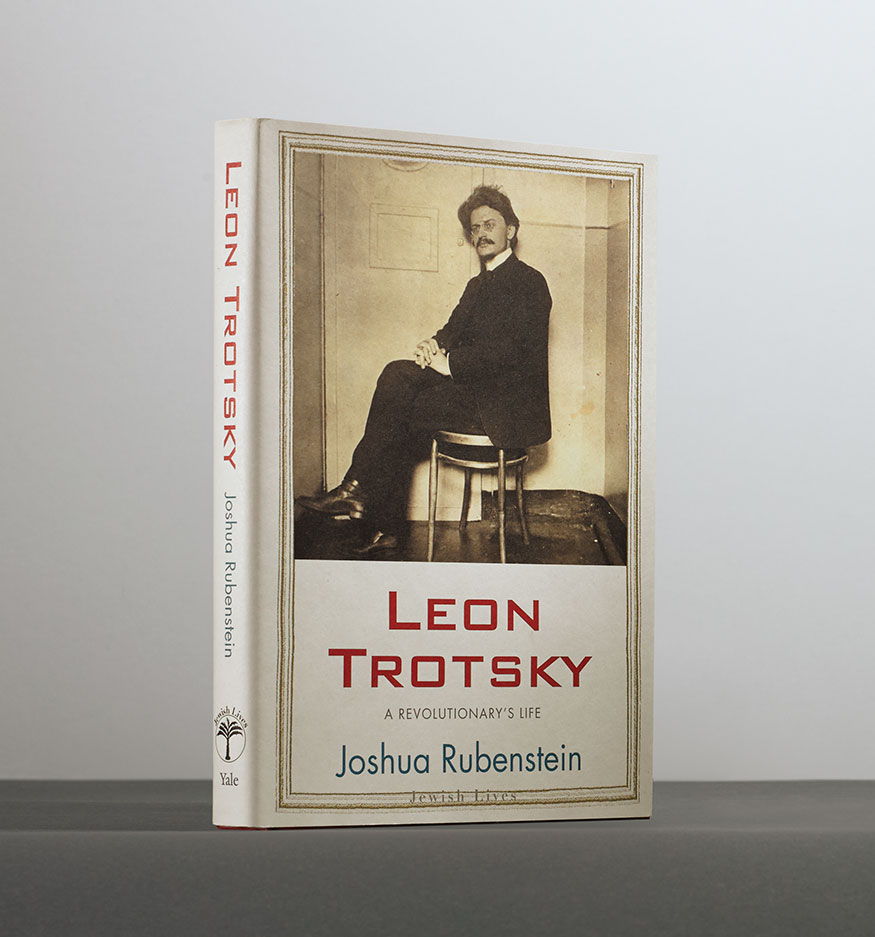
Leon Trotsky: A Revolutionary’s Life
$26.00

By Joshua Rubenstein
Published October 15, 2011
240 pages

“Exemplary” —The Jewish Advocate

Born Lev Davidovich Bronstein in southern Ukraine, Trotsky was both a world-class intellectual and a man capable of the most narrow-minded ideological dogmatism. He was an effective military strategist and an adept diplomat, who staked the fate of the Bolshevik revolution on the meager foundation of a Europe-wide Communist upheaval. He was a master politician who played his cards badly in the momentous struggle for power against Stalin in the 1920s. And he was an assimilated, indifferent Jew who was among the first to foresee that Hitler’s triumph would mean disaster for his fellow European Jews, and that Stalin would attempt to forge an alliance with Hitler if Soviet overtures to the Western democracies failed. 

Here, Trotsky emerges as a brilliant and brilliantly flawed man. Rubenstein offers us a Trotsky who is mentally acute and impatient with others, one of the finest students of contemporary politics who refused to engage in the nitty-gritty of party organization in the 1920s, when Stalin was maneuvering, inexorably, toward Trotsky’s own political oblivion. 

As Joshua Rubenstein writes in his preface, “Leon Trotsky haunts our historical memory. A preeminent revolutionary figure and a masterful writer, Trotsky led an upheaval that helped to define the contours of twentieth-century politics.” In this lucid and judicious evocation of Trotsky’s life, Joshua Rubenstein gives us an interpretation for the twenty-first century.


Papa, can you hear me?

Rebecca Keys

Watch Barbra Streisand's haunting rendition of "Papa, can you hear me?" from Yentl (1983), and learn more about Streisand's legendary musical career with Jewish Lives.

 
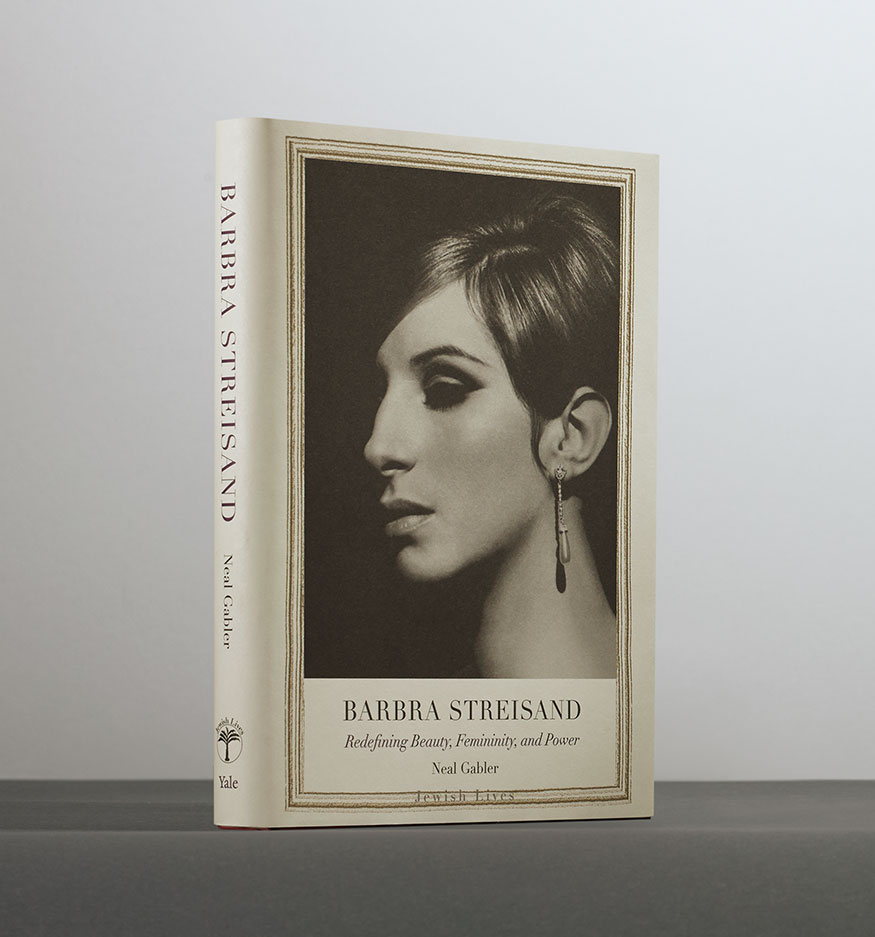
Barbra Streisand: Redefining Beauty, Femininity, and Power
$26.00

By Neal Gabler
Published April 26, 2016
296 pages

“Fascinating and insightful” —The Wall Street Journal

An enthralling appreciation of the monumentally gifted popular artist and cultural icon who challenged Hollywood’s standards of beauty and glamour

Barbra Streisand has been called the “most successful...talented performer of her generation” by Vanity Fair, and her voice, said pianist Glenn Gould, is “one of the natural wonders of the age.” Streisand scaled the heights of entertainment—from a popular vocalist to a first-rank Broadway star in Funny Girl to an Oscar-winning actress to a producer and director. But she has also become a cultural icon who has transcended show business. To achieve her success, Brooklyn-born Streisand had to overcome tremendous odds, not the least of which was her Jewishness. Dismissed, insulted, even reviled when she embarked on a show business career for acting too Jewish and looking too Jewish, she brilliantly converted her Jewishness into a metaphor for outsiderness that would eventually make her the avenger for anyone who felt marginalized and powerless.

Neal Gabler examines Streisand’s life and career through this prism of otherness—a Jew in a gentile world, a self-proclaimed homely girl in a world of glamour, a kooky girl in a world of convention—and shows how central it was to Streisand’s triumph as one of the voices of her age.


4 Questions with Danya Shults

Rebecca Keys

 
4-questions-yellow (002).jpg
 

Each month we'll ask a preeminent Jewish thinker 4 questions about the Jewish experience.

4 Questions with Danya Shults

Dayna_3 (002).jpg

Danya Shults is the founder of Arq, a digital community that helps people connect with Jewish life and culture in a relevant, inclusive, and convenient way. Learn more about Arq at thisisarq.com.

1. In your opinion, what is the defining feature of Jewish life today?

A blend of curiosity and originality. Personal ownership. Fluidity. Nuance. Uncertainty.

Today, I see people seeking new, creative, and spiritual ways to practice Judaism - observant and non - that merge progressive values and lifestyles with a love for tradition and history. Specifically, when it comes to Israel, people are seeking belonging in communities and conversations that encourage a plurality of views. Ritual and community are paramount, but prayer and belief in God aren't required.

2. What is your favorite Jewish book and why?

The Chosen by Chaim Potok holds a special place in my heart. Growing up, we had a family rule that we could bring a book to shul if it had Jewish themes, and an old, original copy of The Chosen was my go-to. It's serious enough for Yom Kippur, and its themes of personal purpose and desire and identity, deep friendships that push people to be their truest selves, and tradition v. modernity are my favorite kind.

On the other hand, another one of my shul books is Are You There God, It's Me Margaret, by Judy Blume, which is about sex and religion and womanhood and everything in between and is always worth a re-read. 

3. What do you think Jewish life will look like in 100 years from now?

On one hand, the more things change, the more they stay the same. As the world shifts drastically around us, we cling to the things we know and that are safe and comfortable, and for many people, that's religious tradition. At the same time, every paradigm in our lives - from sexuality to gender and race - is shifting and becoming more blended and fluid, and I think we'd be naive to believe religion won't follow that same path in some way.

In 100 years, when my future grandchildren are grown-ups, I hope and imagine they'll honor and practice the same core Jewish rituals and holidays that my family and I have practiced for generations, but also that their Judaism will be part of a larger more colorful spiritual whole and that their Jewish life will be open and inclusive. That said, I think it's likely Jewish life will also be more divided than it is today, with the ultra observant in one camp and everyone else in another.

4. If you could meet any figure from Jewish history, who would it be and why?

Joan Rivers for her entrepreneurial and comedic prowess and unabashed Jewish pride, Miriam for her bravery and leadership, and my great grandparents who fled persecution in Eastern Europe and built brand new lives in the United States - I wish I could discuss our current day issues with them and, hopefully, glean optimism and sense of possibility from them.

Jewish Life of the Month: Gershom Scholem

Rebecca Keys

Image courtesy of Wikimedia Commons

Image courtesy of Wikimedia Commons

Gershom Scholem

Dates
1897-1982

Impact
Gershom Scholem pioneered the study of Jewish mysticism as a legitimate academic discipline. He moved to Palestine in 1923 and participated in the creation of the Hebrew University, where he was a towering figure for nearly seventy years.

Famous Quote
"A mystic is a man who has been favored with an immediate, and to him real, experience of the divine, of ultimate reality, or who at least strives to attain such experience."

 
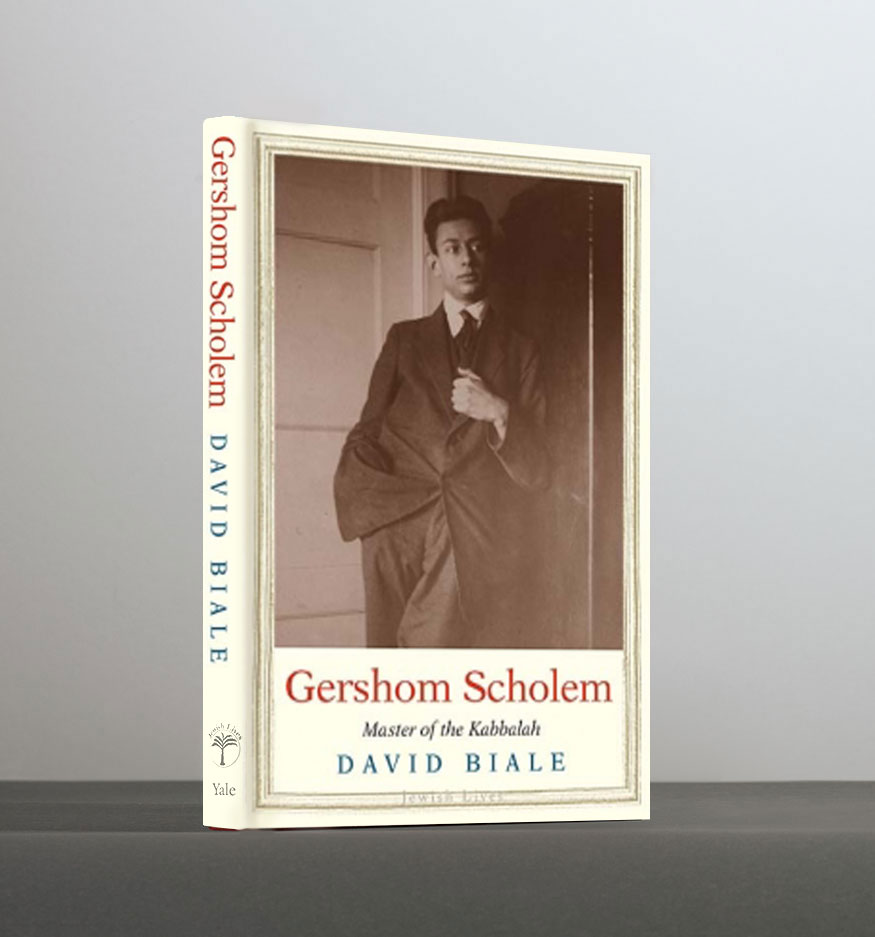
Gershom Scholem: Master of the Kabbalah
$26.00

By David Biale
Published June 19, 2018
256 pages

"Superb” —Steven Aschheim

A new biography of the seminal twentieth-century historian and thinker who pioneered the study of Jewish mysticism and profoundly influenced the Zionist movement

Gershom Scholem (1897–1982) was perhaps the foremost Jewish intellectual of the twentieth century. Pioneering the study of Jewish mysticism as a legitimate academic discipline, he overturned the rationalist bias of his predecessors and revealed an extraordinary world of myth and messianism. In his youth, he rebelled against the assimilationist culture of his parents and embraced Zionism as the vehicle for the renewal of Judaism in a secular age. He moved to Palestine in 1923 and participated in the creation of the Hebrew University, where he was a towering figure for nearly seventy years.

David Biale traces Scholem’s tumultuous life of political activism and cultural criticism, including his falling-out with Hannah Arendt over the Eichmann trial. Mining a rich trove of diaries, letters, and other writings, Biale shows that his subject’s inner life illuminates his most important writings. Scholem emerges as a passionately engaged man of his times—a period that encompassed two world wars, the rise of Nazism, and the Holocaust.


4 Questions with Steve Zipperstein

Rebecca Keys

 
4-questions-torquoiseblack (002).jpg
 

Each month we'll ask a preeminent Jewish thinker 4 questions about the Jewish experience.

4 Questions with Steve Zipperstein

Steven J. Zipperstein is the Daniel E. Koshland Professor in Jewish Culture and History at Stanford University. He is the author and editor of eight books including, most recently, Pogrom: Kishinev and the Tilt of History. Zipperstein has been awarded the Leviant Prize of the Modern Language Association, the Judah Magnes Gold Medal of the American Friends of the Hebrew University, and the Koret Prize for Outstanding Contributions to the American Jewish community.  He is also a series editor of the Jewish Lives biography series. 

1. In your opinion, what is the defining feature of Jewish life today?

The astonishing interplay between powerlessness of Jews in the recent past and Jewry's influence today in the west and military power in the Middle East.  Tough to wrap one's head around, and alas fertile ground for contemporary hatred, at least unease.

2. What is your favorite Jewish book and why?

Impossible to choose just one, so a brief medley: Song of Songs, Philip Roth's The Counterlife, Richard Holmes' Footsteps, and quite any of the fiction of A. B. Yehoshua, Amos Oz or Nicole Krauss.   

3. What do you think Jewish life will look like in 100 years from now?

Immense presence of Chabad, continued cultural vitality of Israel amid political decay, unending predictions of the disappearance of American Jewish life beyond its Orthodox sector despite all evidence of its continued health. 

4. If you could meet any figure from Jewish history, who would it be and why?

Josephus

Four Books, Four Heroes

Rebecca Keys

Reading-Jewish-Lives-Header-2+(002).jpg

We're thrilled to share with you a guest blog post by Professor Barry W. Holtz, author of the Jewish Lives biography Rabbi Akiva: Sage of the Talmud

Professor Holtz’s biography of Rabbi Akiva was recently featured as part of the 2017-2018 Jewish Lives Book Club, a program in which communities around the world read four Jewish Lives biographies together:

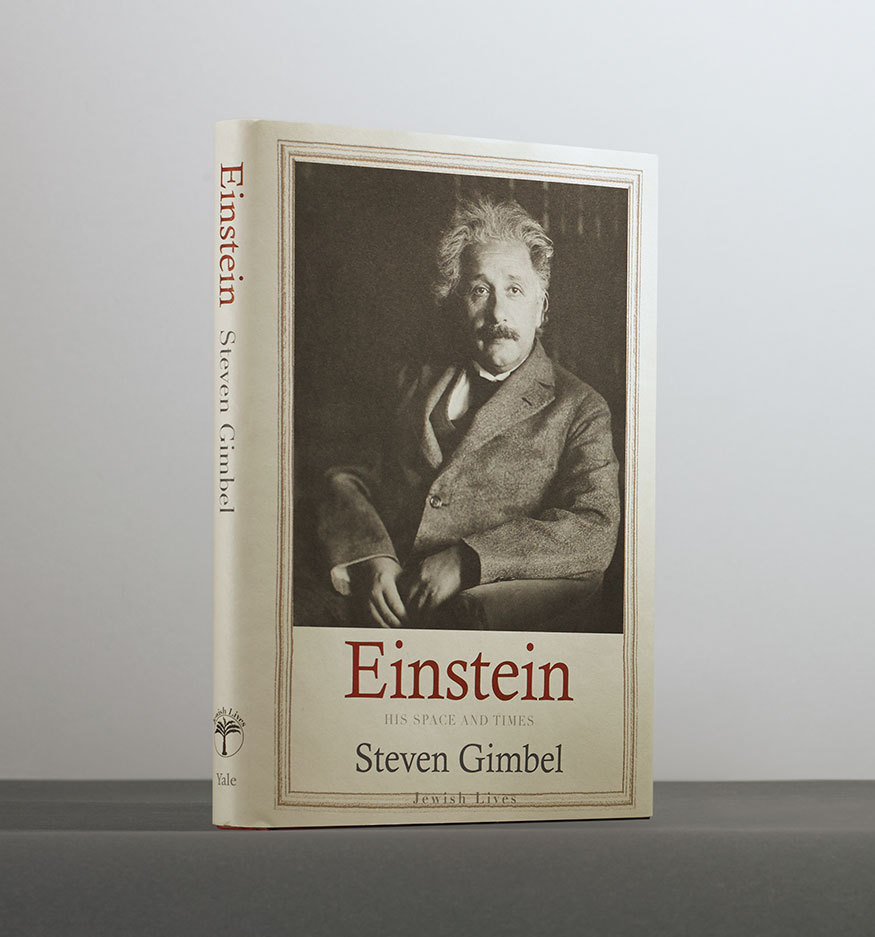
Einstein: His Space and Times
$26.00

By Steven Gimbel
Published April 28, 2015
208 pages

“Incisive” —The Times of London

A revealing new portrait of Albert Einstein, the world’s first scientific “superstar”

The commonly held view of Albert Einstein is of an eccentric genius for whom the pursuit of science was everything. But in actuality, the brilliant innovator whose Theory of Relativity forever reshaped our understanding of time was a man of his times, always politically engaged and driven by strong moral principles. An avowed pacifist, Einstein’s mistrust of authority and outspoken social and scientific views earned him death threats from Nazi sympathizers in the years preceding World War II. To him, science provided not only a means for understanding the behavior of the universe, but a foundation for considering the deeper questions of life and a way for the worldwide Jewish community to gain confidence and pride in itself.

Steven Gimbel’s biography presents Einstein in the context of the world he lived in, offering a fascinating portrait of a remarkable individual who remained actively engaged in international affairs throughout his life. This revealing work not only explains Einstein’s theories in understandable terms, it demonstrates how they directly emerged from the realities of his times and helped create the world we live in today.

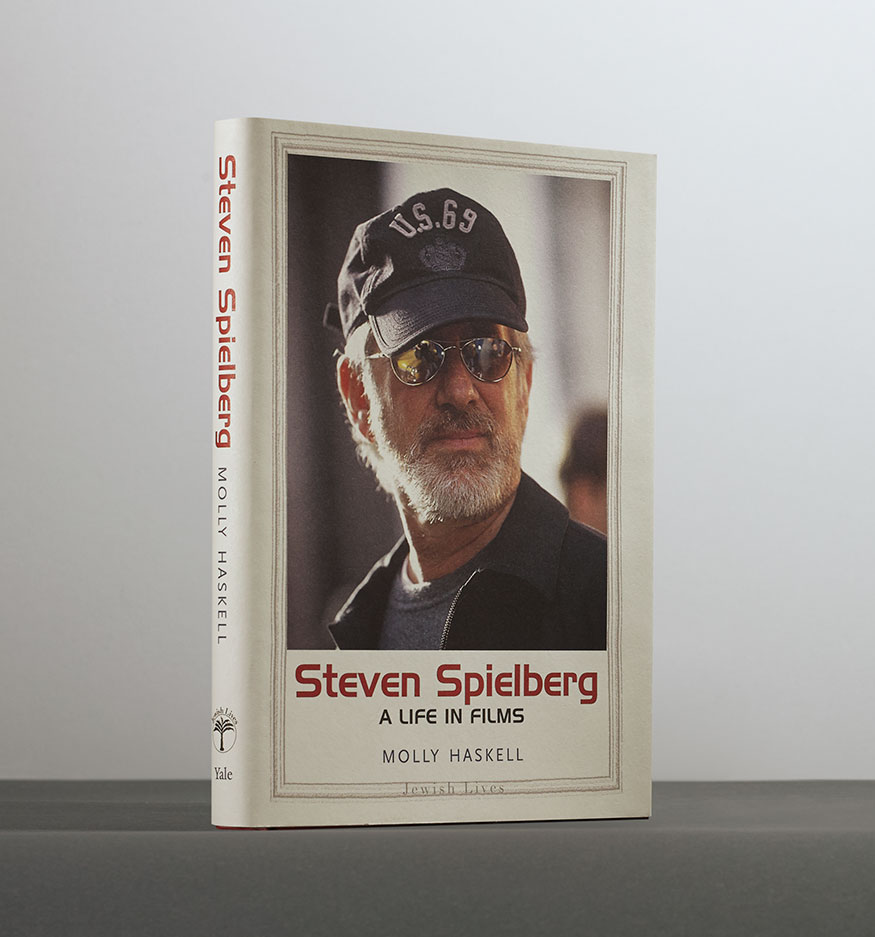
Steven Spielberg: A Life in Films
$26.00

By Molly Haskell
Published January 3, 2017
248 pages

“Uncommonly absorbing” —The New Republic

A film-centric portrait of the extraordinarily gifted movie director whose decades-long influence on American popular culture is unprecedented

“Everything about me is in my films,” Steven Spielberg has said. Taking this as a key to understanding the hugely successful moviemaker, Molly Haskell explores the full range of Spielberg’s works for the light they shine upon the man himself. Through such powerhouse hits as Close Encounters of the Third Kind, E.T., Jurassic Park, and Indiana Jones, to lesser-known masterworks like A.I. and Empire of the Sun, to the haunting Schindler’s List, Haskell shows how Spielberg’s uniquely evocative filmmaking and story-telling reveal the many ways in which his life, work, and times are entwined.

Organizing chapters around specific films, the distinguished critic discusses how Spielberg’s childhood in non-Jewish suburbs, his parents’ traumatic divorce, his return to Judaism upon his son’s birth, and other events echo in his work. She offers a brilliant portrait of the extraordinary director—a fearful boy living through his imagination who grew into a man whose openness, generosity of spirit, and creativity have enchanted audiences for more than 40 years.

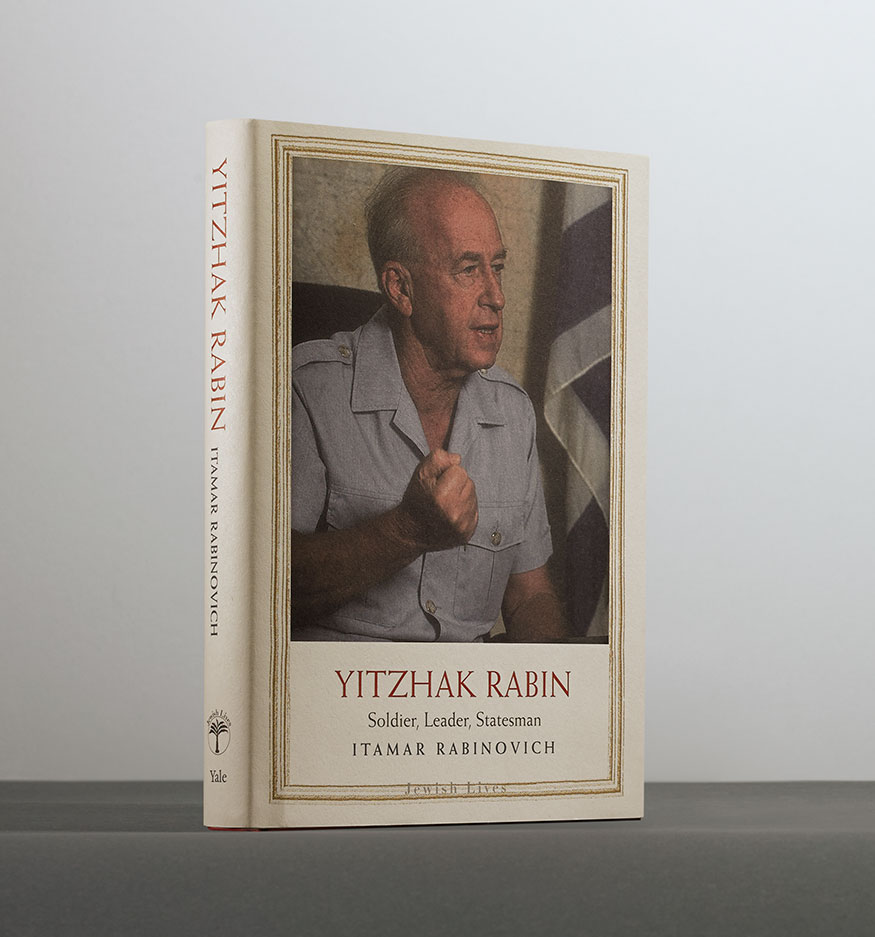
Yitzhak Rabin: Soldier, Leader, Statesman
$26.00

By Itamar Rabinovich
Published March 5, 2017
304 pages

“A thoughtful and extraordinarily comprehensive account of a significant leader” —Henry A. Kissinger

An insider’s perspective on the life and influence of Israel’s first native-born prime minister, his bold peace initiatives, and his tragic assassination

More than two decades have passed since prime minister Yitzhak Rabin’s assassination in 1995, yet he remains an unusually intriguing and admired modern leader. A native-born Israeli, Rabin became an inextricable part of his nation’s pre-state history and subsequent evolution. This revealing account of his life, character, and contributions draws not only on original research but also on the author’s recollections as one of Rabin’s closest aides.

An awkward politician who became a statesman, a soldier who became a peacemaker, Rabin is best remembered for his valiant efforts to resolve the Israeli-Palestinian conflict and for the Oslo Accords. Itamar Rabinovich provides extraordinary new insights into Rabin’s relationships with powerful leaders including Bill Clinton, Jordan’s King Hussein, and Henry Kissinger, his desire for an Israeli-Syrian peace plan, and the political developments that shaped his tenure. The author also assesses the repercussions of Rabin’s murder: Netanyahu’s ensuing election and the rise of Israel’s radical right wing.

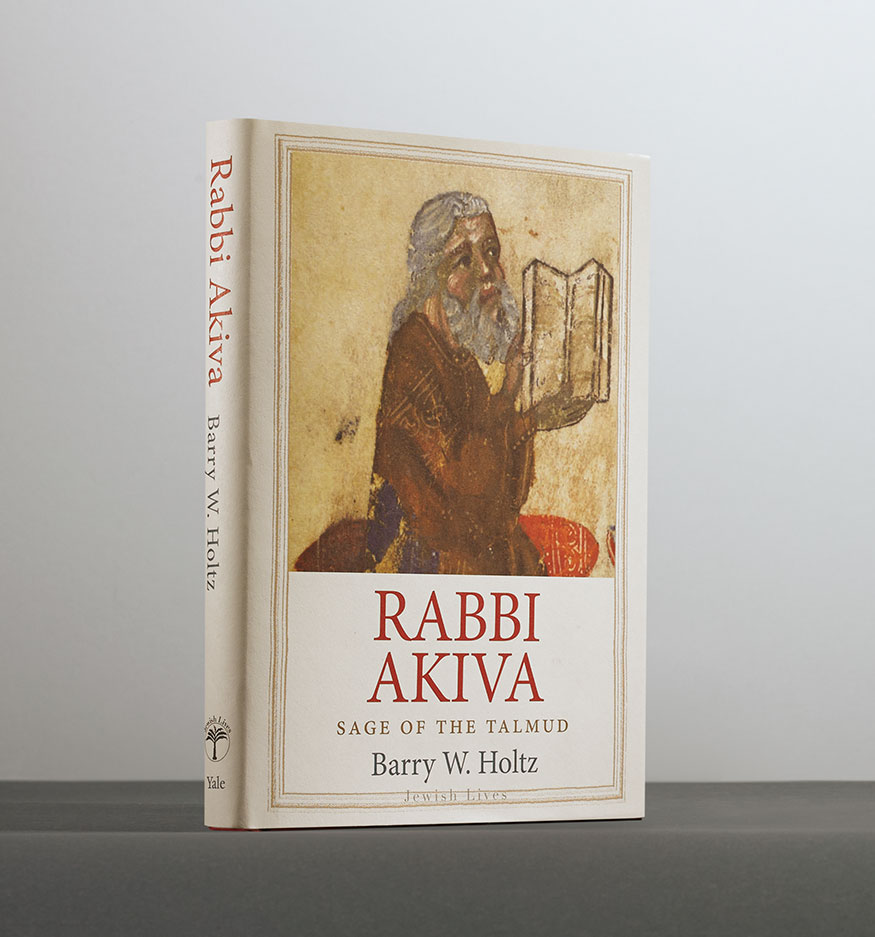
Rabbi Akiva: Sage of the Talmud
$26.00

By Barry W. Holtz
Published March 14, 2017
248 pages

“Lively and thought-provoking” —Publishers Weekly

A compelling and lucid account of the life and teachings of a founder of rabbinic Judaism and one of the most beloved heroes of Jewish history

Born in the Land of Israel around the year 50 C.E., Rabbi Akiva was the greatest rabbi of his time and one of the most important influences on Judaism as we know it today. Traditional sources tell how he was raised in poverty and unschooled in religious tradition but began to learn the Torah as an adult. In the aftermath of the destruction of Jerusalem by the Romans in 70 C.E., he helped shape a new direction for Judaism through his brilliance and his character. Mystic, legalist, theologian, and interpreter, he disputed with his colleagues in dramatic fashion yet was admired and beloved by his peers. Executed by Roman authorities for his insistence on teaching Torah in public, he became the exemplar of Jewish martyrdom.

Drawing on the latest historical and literary scholarship, this book goes beyond older biographies, untangling a complex assortment of ancient sources to present a clear and nuanced portrait of Talmudic hero Rabbi Akiva.

In this guest blog post, Professor Holtz will share his insights on what these four prominent Jewish figures have in common, and how their lives and legacies illuminate the Jewish experience.


Four Books, Four Heroes
By Barry W. Holtz

It was fortunate indeed that a few days before I was interviewed for the livestream broadcast of the Jewish Lives Book Club back in May, I had had a conversation with Ethan Witkovsky, the Assistant Rabbi of the Park Avenue Synagogue in New York City about one particular question he was thinking of asking me.

But when the question came it felt like it came out of the blue:  “Now that we are coming to the end of this year’s book club,” he asked, “how might you see commonalities among the four figures whose biographies we read this year?”

Now, I knew that Ethan was not out to stump me. After all, he had been my student when he was in rabbinical school and a great favorite of my children from his days working at Camp Ramah in New England. So he had floated that trial balloon during our discussion in advance of the evening at his synagogue. 

In fact the interview was moving along smoothly that night. I had, after all, done a number of speaking engagements in various synagogues and JCCs since the book was published. I had even spoken at the National Yiddish Book Center where I tried to relate the stories of Akiva to the much later tradition of storytelling in (mostly secular) Yiddish literature.

So I was used to answering questions about Rabbi Akiva of various sorts. But when Ethan asked me to connect the four books in the year’s book club, I had a moment of brain freeze. “Wait,” I’m thinking to myself, “did I really have an answer to that question? Did I really agree to address that?”  

I offered a few self-deprecating and humorous remarks as I desperately tried to refocus on an answer: Hmm, Einstein, Spielberg, Rabin, Akiva: one born almost 2000 years ago; one born toward the end of the 19th Century; one born toward the beginning of the 20th Century; one born a few months before my own birthday. No connection there. 

One who escaped persecution to live out his life universally admired, dying at peace in Princeton New Jersey; one acclaimed throughout the world for both his work and his philanthropy, still alive and still active; one who was cruelly executed by a vicious oppressor for teaching Torah; and one, a leader of his people, a warrior and a peace-maker, murdered by one of his own citizens out of hatred and fear. Not much of a similarity there.

It was at that moment that my memory of the previous conversation with Ethan clicked in. At that time, without the pressure of being in front of a large audience, the answer to the question was clear to me and I was able to pull my answer out of my memory bank.  

I suggested that you could see each of them as representing a different version of what it means to be a Jewish hero: Einstein stood for the heroism of the mind, in his case scientific intelligence. Einstein used to go by the common epithet, “the smartest man in the world.” And he was a figure of great pride for Jews throughout the world, particularly after the Holocaust. In twentieth century America his rivals might only have been Louis Brandeis, Jonas Salk, and, of course, Hank Greenberg!

If Einstein is the hero of the mind, Spielberg is the hero of artistic imagination. Arguably the greatest film director of all time and certainly the most successful, the very range of Spielberg’s imaginative oeuvre is astonishing: the fantasy of “ET,” the adventure of “Raiders of the Lost Ark,” the historical depth of “Lincoln” and “Saving Private Ryan,” the terror of “Jaws” and, of course, the power of “Schindler’s List," and these films only touch the surface of his output. On top of that, Spielberg’s enormous philanthropic efforts following “Schindler’s List” also made him a hero to many Jews. 

Rabin, is in a sense the obvious traditional kind of hero. For many Jews his leadership of Israel’s Defense Forces during the 1967 war sealed his image as a hero in warfare, but his move as Prime Minister to reach out to find a lasting peace with Israel’s Arab neighbors marked his transition from one kind of hero to another. His death, at the moment in which peace seemed like it might finally be possible, shattered the hopes of many Jews around the world. And the fact that he was assassinated by a Jew, a religious Jew at that, made his life story become almost that of legend.
And finally, Rabbi Akiva. For me Akiva is a hero in many different ways. The stories about him portray him as at once a brilliant intellect who essentially cemented in Jewish memory the notion of what it means to study Torah. Although Akiva did not invent the mode of Torah learning that I like to call examining and interrogating the text, asking questions about every detail, he is the person most associated with what could be called “that Jewish way of reading.”

It can be argued, I believe, that this way of reading influenced Jewish consciousness for millennia, even for secular Jews after the Jewish Enlightenment begun around 150 years ago. It may be summed up in the Yiddish phrase a yiddishe kopp, a Jewish “head.” But Akiva was more than that. He was a model of spiritual depth, admired by Jewish mystics for his profound connection to God and the depth of his prayer life. And of course he too died a martyr’s death, modeling what it meant to be a hero with tremendous courage.
And so in the end I think it is hardly far-fetched to think of these four personages as exemplifying what Jews have admired throughout the ages: mind, imagination, courage and spirit. All of them heroes each in their own way.

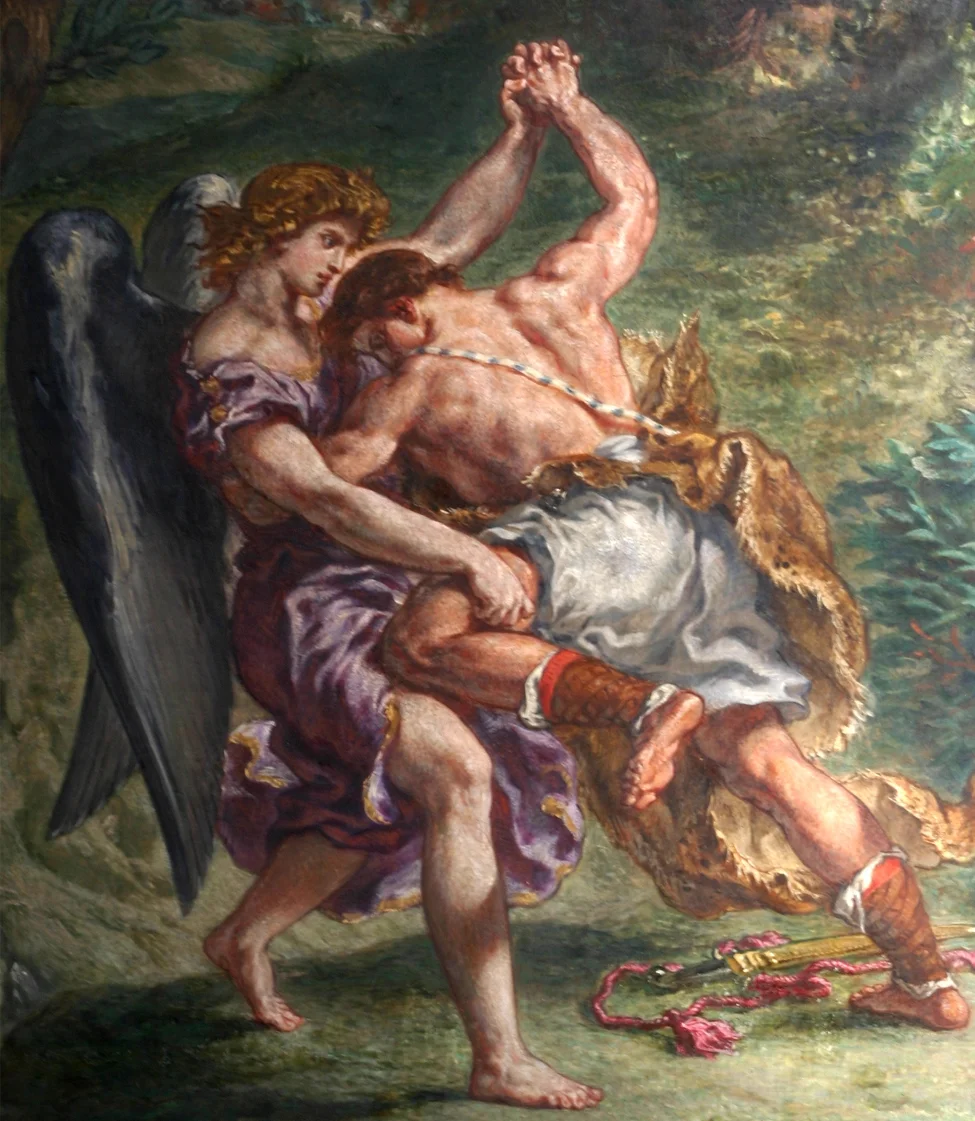
Jewish Life of the Month: Jacob

Rebecca Keys

Image Courtesy of Wikimedia Commons

Image Courtesy of Wikimedia Commons

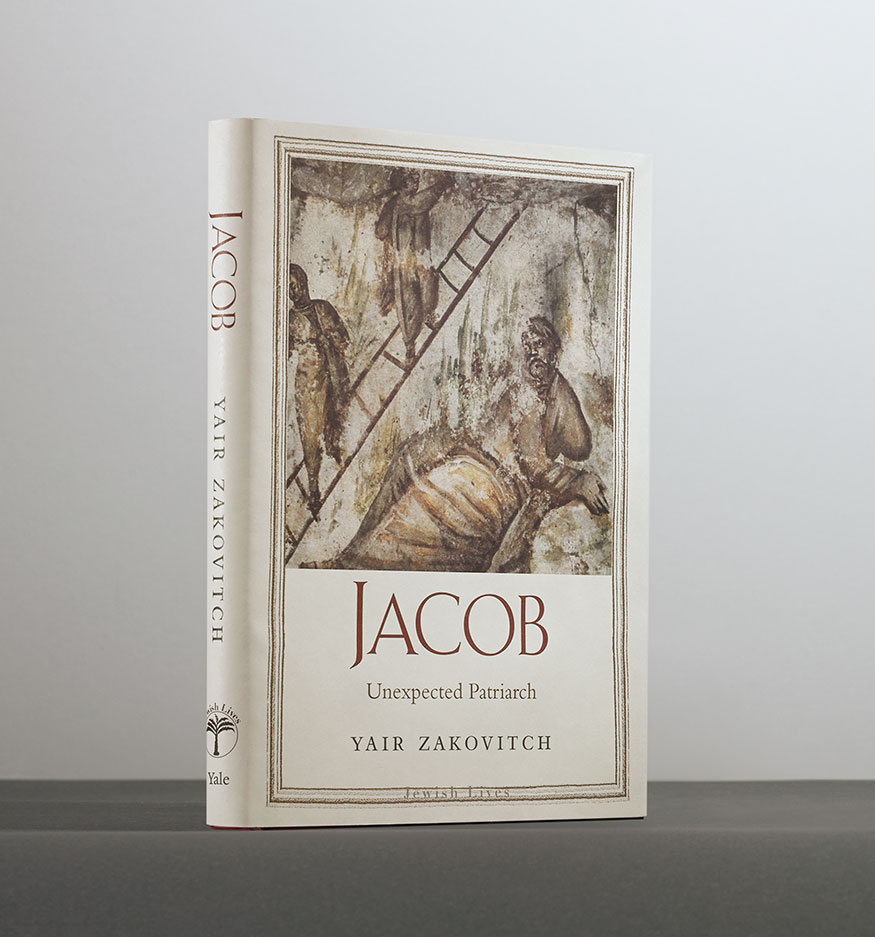
Jacob

Dates
Biblical period

Impact
One of the three biblical patriarchs, Jacob occupies the Jewish imagination as a righteous trickster. His sons represent the 12 tribes of Israel, and he is best known for a series of renowned struggles with his brother Esau, with his father-in-law Laban, with an angel, with his wives, and with his own sons.

Famous Quote
"And Jacob said to his father, I am Esau your firstborn." (Genesis 27:19)

Jacob: Unexpected Patriarch
$29.00

By Yair Zakovitch
Published November 20, 2012
216 pages

“Eloquently provocative” —Choice

A powerful hero of the Bible, Jacob is also one of its most complex figures. 

Bible stories recounting his life often expose his deception, lies, and greed—then, puzzlingly, attempt to justify them. In this book, eminent biblical scholar Yair Zakovitch presents a complete view of the patriarch, first examining Jacob and his life story as presented in the Bible, then also reconstructing the stories that the Bible writers suppressed—tales that were well-known, perhaps, but incompatible with the image of Jacob they wanted to promote. Through a work of extraordinary “literary archaeology,” Zakovitch explores the recesses of literary history, reaching back even to the stage of oral storytelling, to identify sources of Jacob's story that preceded the work of the Genesis writers.

The biblical writers were skilled mosaic-makers, Zakovitch shows, and their achievement was to reshape diverse pre-biblical representations of Jacob in support of their emerging new religion and identity. As the author follows Jacob in his wanderings and revelations, his successes, disgraces, and disappointments, he also considers the religious and political environment in which the Bible was written, offering a powerful explication of early Judaism.

Introducing a New Blog Series

Rebecca Keys

 
1-animation-4-questions (002).gif
 

Each month we'll ask a preeminent Jewish scholar 4 questions about the Jewish experience.

4 Questions with Anita Shapira

Anita Shapira is professor emerita at Tel Aviv University, where she previously served as dean of the Faculty of Humanities and held the Ruben Merenfeld Chair for the Study of Zionism. Her previous books include the Jewish Lives biography Ben-Gurion: Father of Modern Israel, and Israel: A History, winner of the National Jewish Book Award. Anita is the Israel Prize laureate of 2008, and she lives in Tel Aviv.

1. In your opinion, what is the defining feature of Jewish life today?

I would choose Jewish diversity, and the existence of two basic forms of Jewish lives: living in a Jewish state, and living in a liberal non-Jewish state.

2. What is your favorite Jewish book and why?

The Tanakh. It is the most interesting, influential, inspiring epic ever. There can hardly be Jewish culture without it.

3. What do you think Jewish life will look like in 100 years from now?

I don’t know. One thing I am sure about: it would not be one way of life, but many.

4. If you could meet any figure from Jewish history, who would it be and why?

King David: the most controversial, full of contradictions and flaws, and hence most modern and human person in the galaxy of Jewish figures.

Explore the Legacy of Harvey Milk's Activism

Rebecca Keys

We're thrilled to share with you a guest blog post by Robert Bank, President and CEO of the American Jewish World Service (AJWS), about how Harvey Milk’s legacy continues to inspire the Jewish commitment to justice.


Five Ways Harvey Milk Inspires My Work for Social Justice Today

By Robert Bank

It is difficult to imagine the contours of my life without the influence of one of my heroes: Harvey Milk, a social justice giant and the first openly gay elected official in California. I immigrated to the United States from South Africa in 1977, one year before Harvey’s assassination. As a young Jew who was just coming out as gay, I was deeply inspired by Harvey’s courage, confidence and secure sense of self as an ‘out-and-proud’ gay Jewish man, unafraid to speak truth to power. 

These powerful connections with Harvey’s life story came back to me in recent weeks while reading a new and very engaging biography of Harvey Milk by Lillian Faderman. Her book thoughtfully explores Harvey’s life, legacy and activism in relation to his “otherness” as a gay Jew. 

Today, Harvey’s legacy is palpably alive in my work. As President and CEO of American Jewish World Service—a global human rights organization inspired by the Jewish commitment to justice, I have the good fortune to meet and work with advocates for LGBTI rights in Africa, Asia, Latin America and the Caribbean. When I meet these and other brave advocates we support, I often think about what it takes to make an enduring difference for people who are silenced or rendered invisible. What must we do to ensure that people are treated with dignity? How can we work with others who may not see eye-to-eye with us on every matter? When we face unexpected setbacks, how can we lead with resilience?

Here are five lessons that Harvey taught me about leading for a better world, which still inspire me every day.

1. Be authentic. Be yourself. 
In the 1940s, ‘50s and ‘60s, when anti-Semitism still held sway over many institutions and communities in the United States, and when many American Jews muted their religious and cultural identities to protect themselves, Harvey proclaimed his Jewishness with pride. Similarly, he knew that ending homophobia would happen only when gay people dared to live openly. “I know that it is hard and will hurt,” he acknowledged, “But come out to your relatives, friends, neighbors, and fellow workers; to the people who work where you eat and shop... Once and for all, break down the myths, destroy the lies and distortions.” In my work with LGBT rights activists in the developing world, I know that living openly requires tremendous courage —often at great risk to the safety of those who are open about who they are and whom they love. But I have learned from Harvey—and from brave activists in Uganda, Haiti, Thailand and elsewhere—that change is only possible if we live our own truths. 

2. Take risks. 
When Harvey first ran for the San Francisco Board of Supervisors, he was the owner of a camera shop and had no experience in local politics. And yet, he cared about human rights, recognized the injustices in his community, and wanted to help people who were suffering. I have long admired that Harvey leapt into the unknown world of political campaigns, lost several elections, and kept trying until he finally won. In today’s struggles for human rights here and around the world, barriers to progress often feel insurmountable. But I have learned from Harvey and many other advocates that we don’t know what we can achieve until we give it our all. 

3. Build relationships across lines of difference.
Throughout his political career, Harvey championed many progressive causes. In doing so, he built a constituency that was broader than the gay community, which generated support for LGBT people and other minorities whose interests were often ignored. He frequently held meetings and rallies with people who were considered “outsiders,” including the poor, the elderly, and people of color. Faderman writes, “He had a knack for making whomever he was talking with feel like they had 100 percent of his attention… that whatever they had to say was the most interesting thing Harvey could possibly be listening to.” I continue to be inspired by how Harvey sought to liberate everyone, not just LGBT people, from oppression. And I strive to emulate his practice of deep listening when building relationships with people whose identities are different from my own.

4. Understand history.
When police in San Francisco were violently harassing gay men in the 1970s, Harvey wrote an open letter to the City of San Francisco Hall of Justice, a Superior Court in California, using a trope that would become central to his future writings and speeches. He argued that ignoring police brutality against gay men in San Francisco at that time was dangerously similar to ignoring Nazi brutality against Jews in Germany in the 1930s. He argued that even San Franciscans who disdained LGBT people needed to oppose police brutality because if they didn’t, they would “one day find that they, too, are becoming victims of a police state.” For me, as a Jew who grew up in apartheid South Africa and whose family members battled racisim, I greatly admire how Harvey, like my relatives, understood the lessons of Jewish history to advocate for others who experienced discrimination and state-sanctioned violence in a very different context. 

5. Spread hope. 
“I know that you cannot live on hope alone, but without it, life is not worth living,” Harvey declared to a crowd during one of his political speeches. “You, and you, and you, and you—you have to give people hope.” While uttering these words, he pointed to multiple people in the audience to convey that each and every person has a responsibility to shape a better future. Many of the LGBTI and human rights activists my colleagues and I support in the developing world today have been victims of horrific brutality, political conflicts, and disasters. And yet, they remain hopeful and continue to work for justice against unfavorable odds, reminding me that if we persevere, we will change people’s lives for the better. Harvey’s unwavering optimism is a key ingredient for building a world we can all be proud of. 

I am committed to honoring Harvey’s legacy each and every day in my work for justice and human rights. My own life, and the lives of countless others, have been immeasurably enriched by Harvey’s courage. May his memory continue to be an inspiration to us and generations to come to fight for the dignity and rights of every person. 

Robert Bank is the President and CEO of American Jewish World Service. Inspired by the Jewish commitment to justice, American Jewish World Service (AJWS) works to realize human rights and end poverty in the developing world. Learn more at www.ajws.org.

We're celebrating with FREE SHIPPING all month!

Rebecca Keys

JEwish American Hertiage Month Header (002).JPG

May is Jewish American Heritage month, and we're celebrating the exceptional lives of Jewish Americans! Get FREE SHIPPING on all Jewish Lives books + collections, only at JewishLives.org.

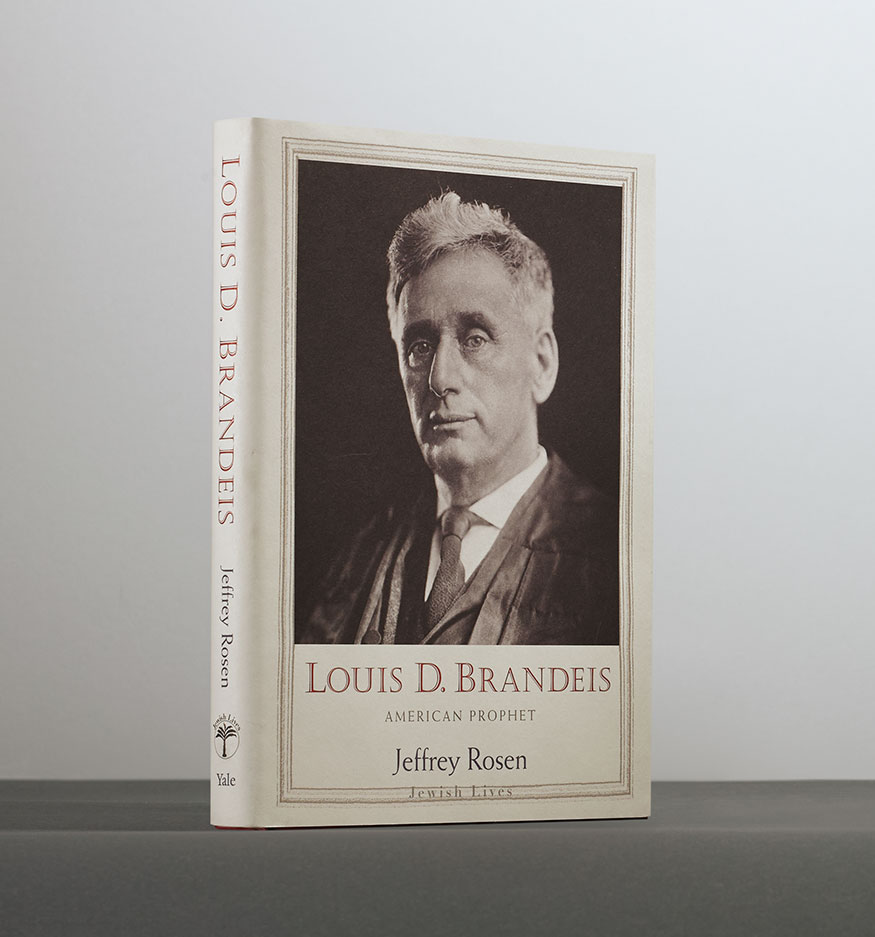
Louis D. Brandeis: American Prophet
$26.00

By Jeffrey Rosen
Published June 1, 2016
256 pages

“Compelling” —LA Review of Books

A riveting new examination of the leading progressive justice of his era, published in the centennial year of his confirmation to the U.S. Supreme Court

According to Jeffrey Rosen, Louis D. Brandeis was “the Jewish Jefferson,” the greatest critic of what he called “the curse of bigness,” in business and government, since the author of the Declaration of Independence. Published to commemorate the hundredth anniversary of his Supreme Court confirmation on June 1, 1916, Louis D. Brandeis: American Prophet argues that Brandeis was the most farseeing constitutional philosopher of the twentieth century. In addition to writing the most famous article on the right to privacy, he also wrote the most important Supreme Court opinions about free speech, freedom from government surveillance, and freedom of thought and opinion. And as the leader of the American Zionist movement, he convinced Woodrow Wilson and the British government to recognize a Jewish homeland in Palestine. Combining narrative biography with a passionate argument for why Brandeis matters today, Rosen explores what Brandeis, the Jeffersonian prophet, can teach us about historic and contemporary questions involving the Constitution, monopoly, corporate and federal power, technology, privacy, free speech, and Zionism.

Emma Goldman: Revolution as a Way of Life
$26.00

By Vivian Gornick
Published October 4, 2011
160 pages

“Gripping” —The Boston Globe

Emma Goldman is the story of a modern radical who took seriously the idea that inner liberation is the first business of social revolution. Her politics, from beginning to end, was based on resistance to that which thwarted the free development of the inner self. The right to stay alive in one’s senses, to enjoy freedom of thought and speech, to reject the arbitrary use of power—these were key demands in the many public protest movements she helped mount.

Anarchist par excellence, Goldman is one of the memorable political figures of our time, not because of her gift for theory or analysis or even strategy, but because some extraordinary force of life in her burned, without rest or respite, on behalf of human integrity—and she was able to make the thousands of people who, for decades on end, flocked to her lectures, feel intimately connected to the pain inherent in the abuse of that integrity. To hear Emma describe, in language as magnetic as it was illuminating, what the boot felt like on the neck, was to experience the mythic quality of organized oppression. As the women and men in her audience listened to her, the homeliness of their own small lives became invested with a sense of drama that acted as a catalyst for the wild, vagrant hope that things need not always be as they were. All you had to do, she promised, was resist. In time, she herself would become a world-famous symbol for the spirit of resistance to the power of institutional authority over the lone individual.

In Emma Goldman, Vivian Gornick draws a surpassingly intimate and insightful portrait of a woman of heroic proportions whose performance on the stage of history did what Tolstoy said a work of art should do: it made people love life more.

Julius Rosenwald: Repairing the World
$26.00

By Hasia R. Diner
Published October 24, 2017
256 pages

“A masterpiece” —David Levering Lewis

The portrait of a humble retail magnate whose visionary ideas about charitable giving transformed the practice of philanthropy in America and beyond

Julius Rosenwald (1862–1932) rose from modest means as the son of a peddler to meteoric wealth at the helm of Sears, Roebuck. Yet his most important legacy stands not upon his business acumen but on the pioneering changes he introduced to the practice of philanthropy. While few now recall Rosenwald’s name—he refused to have it attached to the buildings, projects, or endowments he supported—his passionate support of Jewish and African American causes continues to influence lives to this day.

This biography of Julius Rosenwald explores his attitudes toward his own wealth and his distinct ideas about philanthropy, positing an intimate connection between his Jewish consciousness and his involvement with African Americans. The book shines light on his belief in the importance of giving in the present to make an impact on the future, and on his encouragement of beneficiaries to become partners in community institutions and projects. Rosenwald emerges from the pages as a compassionate man whose generosity and wisdom transformed the practice of philanthropy itself.

Barbra Streisand: Redefining Beauty, Femininity, and Power
$26.00

By Neal Gabler
Published April 26, 2016
296 pages

“Fascinating and insightful” —The Wall Street Journal

An enthralling appreciation of the monumentally gifted popular artist and cultural icon who challenged Hollywood’s standards of beauty and glamour

Barbra Streisand has been called the “most successful...talented performer of her generation” by Vanity Fair, and her voice, said pianist Glenn Gould, is “one of the natural wonders of the age.” Streisand scaled the heights of entertainment—from a popular vocalist to a first-rank Broadway star in Funny Girl to an Oscar-winning actress to a producer and director. But she has also become a cultural icon who has transcended show business. To achieve her success, Brooklyn-born Streisand had to overcome tremendous odds, not the least of which was her Jewishness. Dismissed, insulted, even reviled when she embarked on a show business career for acting too Jewish and looking too Jewish, she brilliantly converted her Jewishness into a metaphor for outsiderness that would eventually make her the avenger for anyone who felt marginalized and powerless.

Neal Gabler examines Streisand’s life and career through this prism of otherness—a Jew in a gentile world, a self-proclaimed homely girl in a world of glamour, a kooky girl in a world of convention—and shows how central it was to Streisand’s triumph as one of the voices of her age.

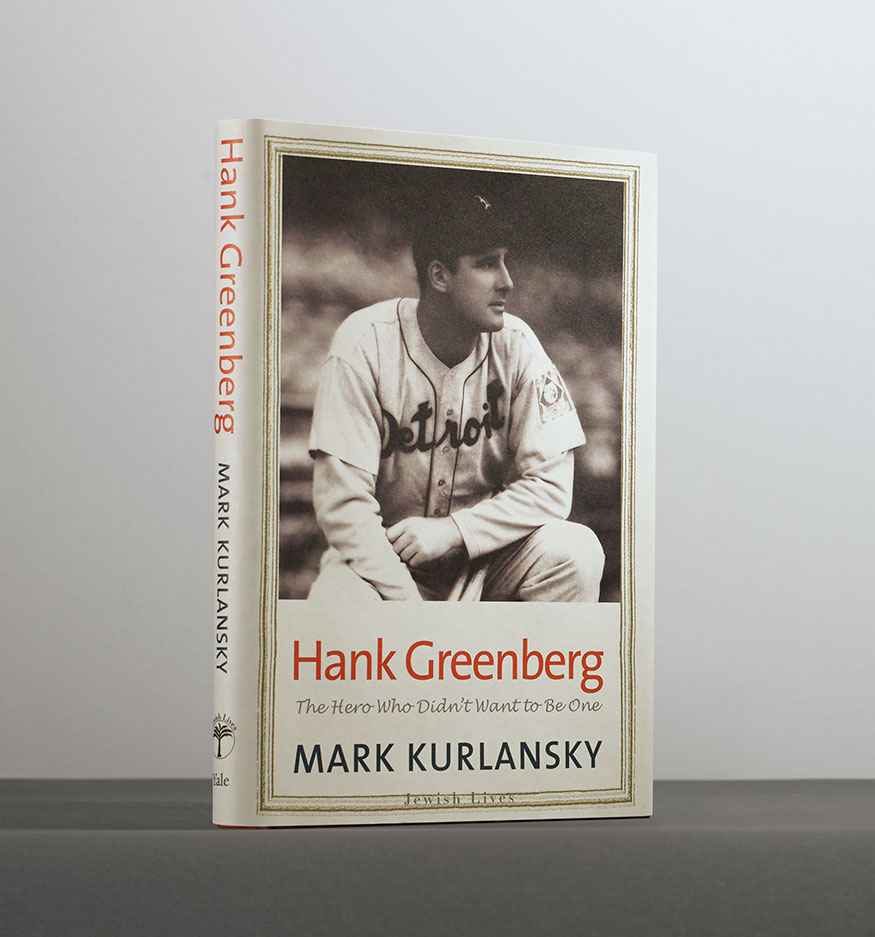
Hank Greenberg: The Hero Who Didn’t Want to Be One
$26.00

By Mark Kurlansky
Published March 29, 2011
192 pages

“A graceful appreciation” —USA Today

One of the reasons baseball fans so love the sport is that it involves certain physical acts of beauty. And one of the most beautiful sights in the history of baseball was Hank Greenberg's swing. His calmly poised body seemed to have some special set of springs with a trigger release that snapped his arms and swept the bat through the air with the clean speed and strength of a propeller. But what is even more extraordinary than his grace and his power is that in Detroit of 1934, his swing—or its absence—became entwined with American Jewish history. Though Hank Greenberg was one of the first players to challenge Babe Ruth's single-season record of sixty home runs, it was the game Greenberg did not play for which he is best remembered. With his decision to sit out a 1934 game between his Tigers and the New York Yankees because it fell on Yom Kippur, Hank Greenberg became a hero to Jews throughout America. Yet, as Kurlansky writes, he was the quintessential secular Jew, and to celebrate him for his loyalty to religious observance is to ignore who this man was.

In Hank Greenberg Mark Kurlansky explores the truth behind the slugger's legend: his Bronx boyhood, his spectacular discipline as an aspiring ballplayer, the complexity of his decision not to play on Yom Kippur, and the cultural context of virulent anti-Semitism in which his career played out.

What Kurlansky discovers is a man of immense dignity and restraint with a passion for sport who became a great reader—a man, too, who was an inspiration to the young Jackie Robinson, who said, “Class tells. It sticks out all over Mr. Greenberg.”

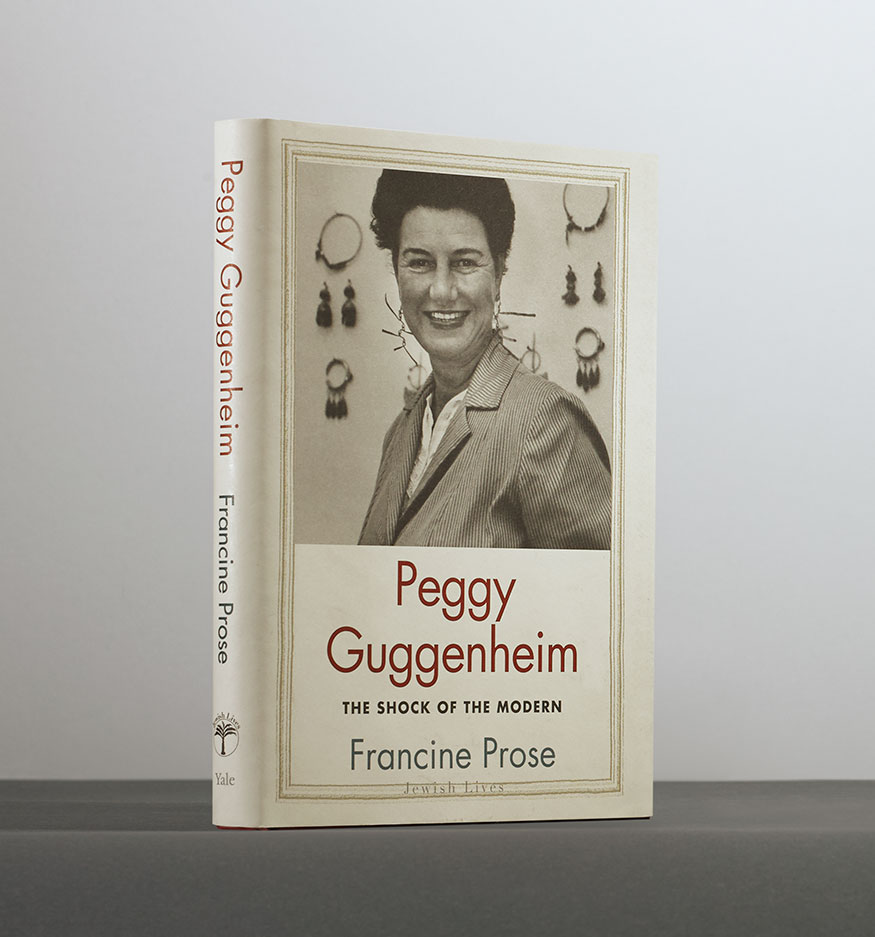
Peggy Guggenheim: The Shock of the Modern
$29.00

By Francine Prose
Published September 29, 2015
200 pages

“Lively, complex, and inclined to shock.” —Publishers Weekly

A spirited portrait of the colorful, irrepressible, and iconoclastic American collector who fearlessly advanced the cause of modern art

One of twentieth-century America’s most influential patrons of the arts, Peggy Guggenheim (1898–1979) brought to wide public attention the work of such modern masters as Jackson Pollock and Man Ray. In her time, there was no stronger advocate for the groundbreaking and the avant-garde. Her midtown gallery was the acknowledged center of the postwar New York art scene, and her museum on the Grand Canal in Venice remains one of the world’s great collections of modern art. Yet as renowned as she was for the art and artists she so tirelessly championed, Guggenheim was equally famous for her unconventional personal life, and for her ironic, playful desire to shock.

Acclaimed best-selling author Francine Prose offers a singular reading of Guggenheim’s life that will enthrall enthusiasts of twentieth-century art, as well as anyone interested in American and European culture and the interrelationships between them. The lively and insightful narrative follows Guggenheim through virtually every aspect of her extraordinary life, from her unique collecting habits and paradigm-changing discoveries, to her celebrity friendships, failed marriages, and scandalous affairs, and Prose delivers a colorful portrait of a defiantly uncompromising woman who maintained a powerful upper hand in a male-dominated world. Prose also explores the ways in which Guggenheim’s image was filtered through the lens of insidious antisemitism.

Explore Israel @ 70 at the Center for Jewish History

Rebecca Keys

Image courtesy of IsraelGPO

Image courtesy of IsraelGPO

Hear from Jewish Lives series editor and author Anita Shapira, Jewish Lives author Ambassador Itamar Rabinovich, Nicole Krauss, Elliott Abrams, and more at a day-long conference on Sunday, June 10th, featuring discussions about Israeli society and politics as well as relations between Israel, America, and the Jewish diaspora. Learn more about this event at cjh.org/israelat70

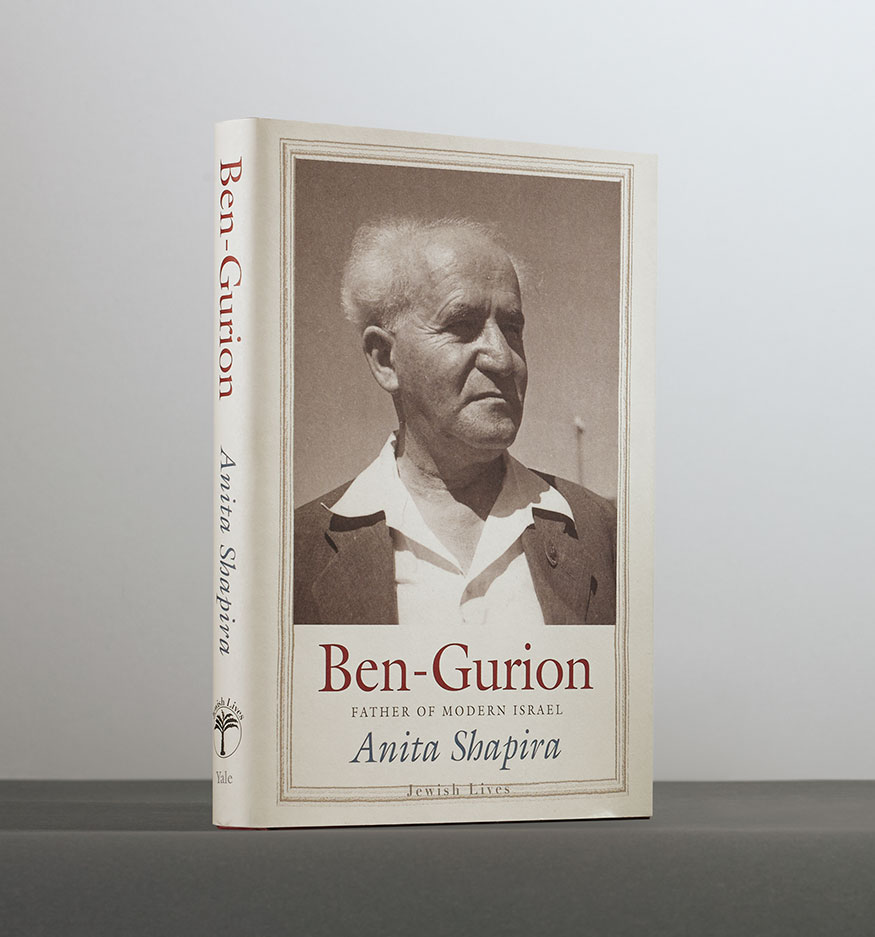
Ben-Gurion: Father of Modern Israel
$26.00

By Anita Shapira
Published November 25, 2014
288 pages

“A beautiful portrayal” —Shimon Peres, President of Israel (2007-2014)

An insightful study of the inner life of the Zionist leader responsible for the creation of the state of Israel

David Ben-Gurion cast a great shadow during his lifetime, and his legacy continues to be sharply debated to this day. There have been many books written about the life and accomplishments of the Zionist icon and founder of modern Israel, but this new biography by eminent Israeli historian Anita Shapira strives to get to the core of the complex man who would become the face of the new Jewish nation. Shapira tells the Ben-Gurion story anew, focusing especially on the period after 1948, during the first years of statehood. As a result of her extensive research and singular access to Ben-Gurion’s personal archives, the author provides fascinating and original insights into his personal qualities and those that defined his political leadership. As Shapira writes, “Ben-Gurion liked to argue that history is made by the masses, not individuals. But just as Lenin brought the Bolshevik Revolution into the world and Churchill delivered a fighting Britain, so with Ben-Gurion and the Jewish state. He knew how to create and exploit the circumstances that made its birth possible.” Shapira’s portrait reveals the flesh-and-blood man who more than anyone else realized the Israeli state.

Yitzhak Rabin: Soldier, Leader, Statesman
$26.00

By Itamar Rabinovich
Published March 5, 2017
304 pages

“A thoughtful and extraordinarily comprehensive account of a significant leader” —Henry A. Kissinger

An insider’s perspective on the life and influence of Israel’s first native-born prime minister, his bold peace initiatives, and his tragic assassination

More than two decades have passed since prime minister Yitzhak Rabin’s assassination in 1995, yet he remains an unusually intriguing and admired modern leader. A native-born Israeli, Rabin became an inextricable part of his nation’s pre-state history and subsequent evolution. This revealing account of his life, character, and contributions draws not only on original research but also on the author’s recollections as one of Rabin’s closest aides.

An awkward politician who became a statesman, a soldier who became a peacemaker, Rabin is best remembered for his valiant efforts to resolve the Israeli-Palestinian conflict and for the Oslo Accords. Itamar Rabinovich provides extraordinary new insights into Rabin’s relationships with powerful leaders including Bill Clinton, Jordan’s King Hussein, and Henry Kissinger, his desire for an Israeli-Syrian peace plan, and the political developments that shaped his tenure. The author also assesses the repercussions of Rabin’s murder: Netanyahu’s ensuing election and the rise of Israel’s radical right wing.