Four Books, Four Heroes
Rebecca Keys

We're thrilled to share with you a guest blog post by Professor Barry W. Holtz, author of the Jewish Lives biography Rabbi Akiva: Sage of the Talmud.
Professor Holtz’s biography of Rabbi Akiva was recently featured as part of the 2017-2018 Jewish Lives Book Club, a program in which communities around the world read four Jewish Lives biographies together:
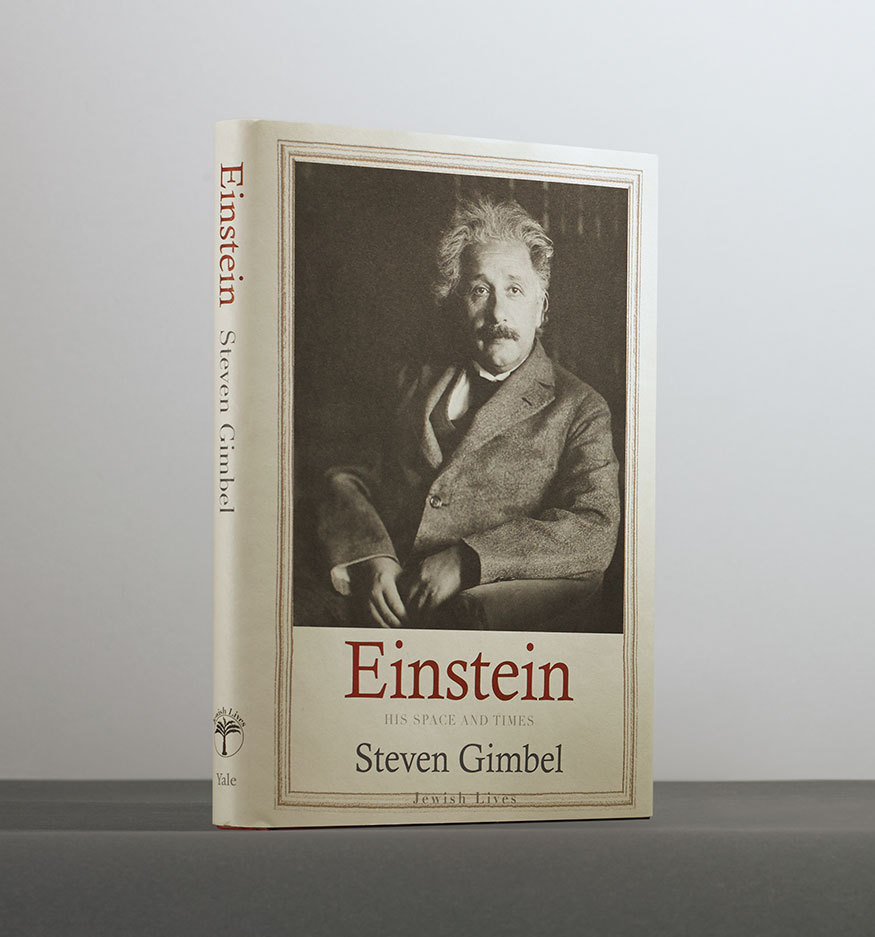
By Steven Gimbel
Published April 28, 2015
208 pages
“Incisive” —The Times of London
A revealing new portrait of Albert Einstein, the world’s first scientific “superstar”
The commonly held view of Albert Einstein is of an eccentric genius for whom the pursuit of science was everything. But in actuality, the brilliant innovator whose Theory of Relativity forever reshaped our understanding of time was a man of his times, always politically engaged and driven by strong moral principles. An avowed pacifist, Einstein’s mistrust of authority and outspoken social and scientific views earned him death threats from Nazi sympathizers in the years preceding World War II. To him, science provided not only a means for understanding the behavior of the universe, but a foundation for considering the deeper questions of life and a way for the worldwide Jewish community to gain confidence and pride in itself.
Steven Gimbel’s biography presents Einstein in the context of the world he lived in, offering a fascinating portrait of a remarkable individual who remained actively engaged in international affairs throughout his life. This revealing work not only explains Einstein’s theories in understandable terms, it demonstrates how they directly emerged from the realities of his times and helped create the world we live in today.
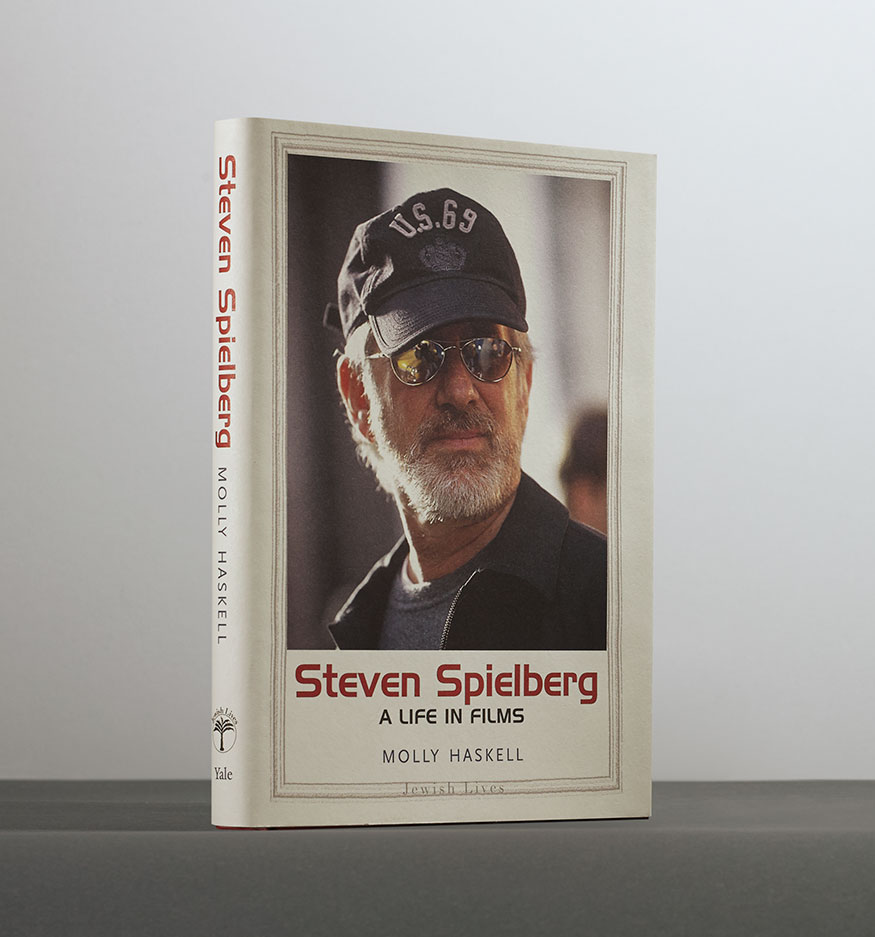
By Molly Haskell
Published January 3, 2017
248 pages
“Uncommonly absorbing” —The New Republic
A film-centric portrait of the extraordinarily gifted movie director whose decades-long influence on American popular culture is unprecedented
“Everything about me is in my films,” Steven Spielberg has said. Taking this as a key to understanding the hugely successful moviemaker, Molly Haskell explores the full range of Spielberg’s works for the light they shine upon the man himself. Through such powerhouse hits as Close Encounters of the Third Kind, E.T., Jurassic Park, and Indiana Jones, to lesser-known masterworks like A.I. and Empire of the Sun, to the haunting Schindler’s List, Haskell shows how Spielberg’s uniquely evocative filmmaking and story-telling reveal the many ways in which his life, work, and times are entwined.
Organizing chapters around specific films, the distinguished critic discusses how Spielberg’s childhood in non-Jewish suburbs, his parents’ traumatic divorce, his return to Judaism upon his son’s birth, and other events echo in his work. She offers a brilliant portrait of the extraordinary director—a fearful boy living through his imagination who grew into a man whose openness, generosity of spirit, and creativity have enchanted audiences for more than 40 years.
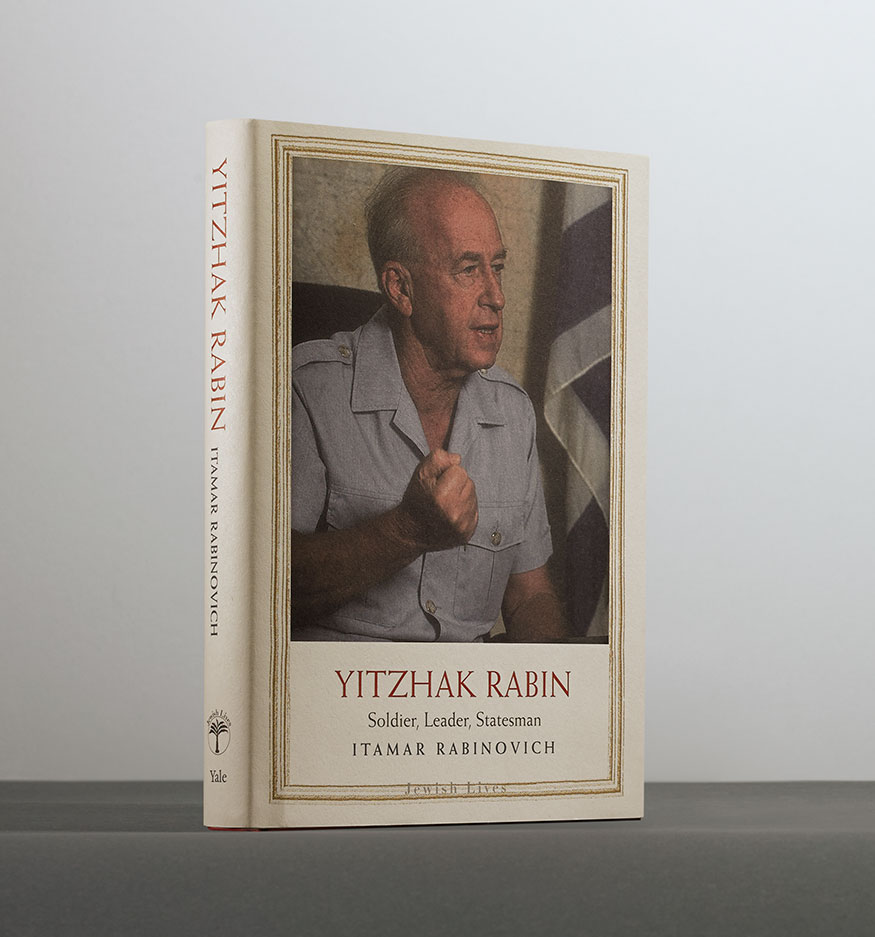
By Itamar Rabinovich
Published March 5, 2017
304 pages
“A thoughtful and extraordinarily comprehensive account of a significant leader” —Henry A. Kissinger
An insider’s perspective on the life and influence of Israel’s first native-born prime minister, his bold peace initiatives, and his tragic assassination
Over 30 years have passed since prime minister Yitzhak Rabin’s assassination in 1995, yet he remains an unusually intriguing and admired modern leader. A native-born Israeli, Rabin became an inextricable part of his nation’s pre-state history and subsequent evolution. This revealing account of his life, character, and contributions draws not only on original research but also on the author’s recollections as one of Rabin’s closest aides.
An awkward politician who became a statesman, a soldier who became a peacemaker, Rabin is best remembered for his valiant efforts to resolve the Israeli-Palestinian conflict and for the Oslo Accords. Itamar Rabinovich provides extraordinary new insights into Rabin’s relationships with powerful leaders including Bill Clinton, Jordan’s King Hussein, and Henry Kissinger, his desire for an Israeli-Syrian peace plan, and the political developments that shaped his tenure. The author also assesses the repercussions of Rabin’s murder: Netanyahu’s ensuing election and the rise of Israel’s radical right wing.
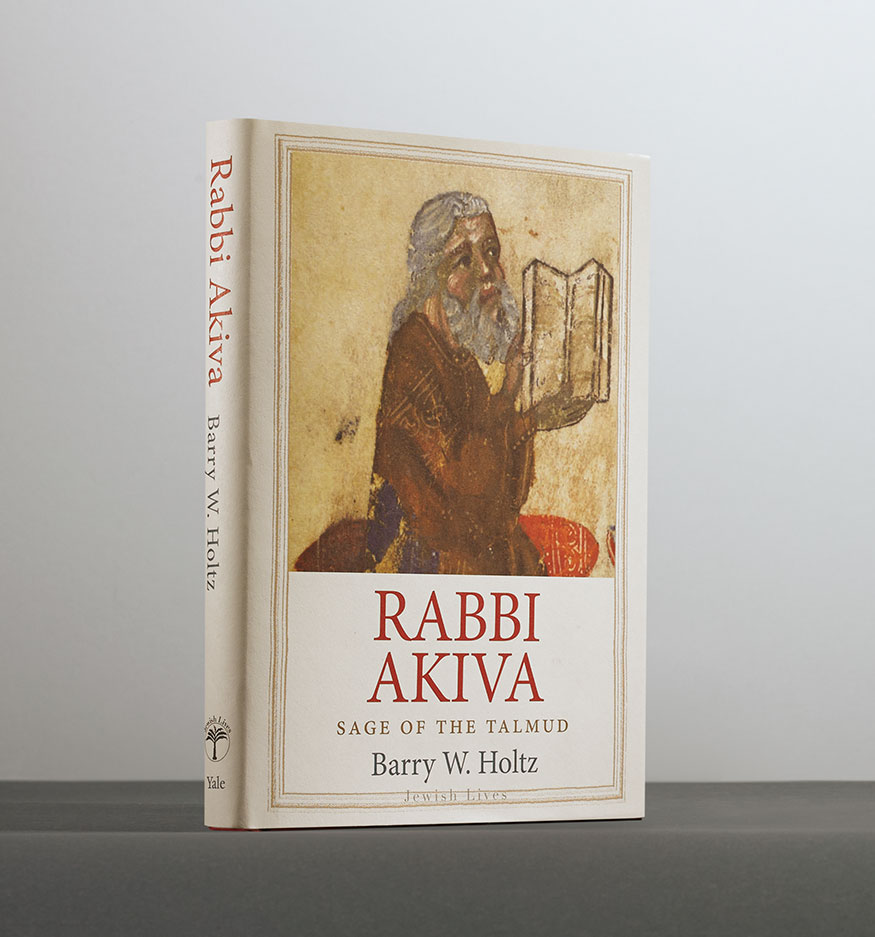
By Barry W. Holtz
Published March 14, 2017
248 pages
“Lively and thought-provoking” —Publishers Weekly
A compelling and lucid account of the life and teachings of a founder of rabbinic Judaism and one of the most beloved heroes of Jewish history
Born in the Land of Israel around the year 50 C.E., Rabbi Akiva was the greatest rabbi of his time and one of the most important influences on Judaism as we know it today. Traditional sources tell how he was raised in poverty and unschooled in religious tradition but began to learn the Torah as an adult. In the aftermath of the destruction of Jerusalem by the Romans in 70 C.E., he helped shape a new direction for Judaism through his brilliance and his character. Mystic, legalist, theologian, and interpreter, he disputed with his colleagues in dramatic fashion yet was admired and beloved by his peers. Executed by Roman authorities for his insistence on teaching Torah in public, he became the exemplar of Jewish martyrdom.
Drawing on the latest historical and literary scholarship, this book goes beyond older biographies, untangling a complex assortment of ancient sources to present a clear and nuanced portrait of Talmudic hero Rabbi Akiva.
In this guest blog post, Professor Holtz will share his insights on what these four prominent Jewish figures have in common, and how their lives and legacies illuminate the Jewish experience.
Four Books, Four Heroes
By Barry W. Holtz
It was fortunate indeed that a few days before I was interviewed for the livestream broadcast of the Jewish Lives Book Club back in May, I had had a conversation with Ethan Witkovsky, the Assistant Rabbi of the Park Avenue Synagogue in New York City about one particular question he was thinking of asking me.
But when the question came it felt like it came out of the blue: “Now that we are coming to the end of this year’s book club,” he asked, “how might you see commonalities among the four figures whose biographies we read this year?”
Now, I knew that Ethan was not out to stump me. After all, he had been my student when he was in rabbinical school and a great favorite of my children from his days working at Camp Ramah in New England. So he had floated that trial balloon during our discussion in advance of the evening at his synagogue.
In fact the interview was moving along smoothly that night. I had, after all, done a number of speaking engagements in various synagogues and JCCs since the book was published. I had even spoken at the National Yiddish Book Center where I tried to relate the stories of Akiva to the much later tradition of storytelling in (mostly secular) Yiddish literature.
So I was used to answering questions about Rabbi Akiva of various sorts. But when Ethan asked me to connect the four books in the year’s book club, I had a moment of brain freeze. “Wait,” I’m thinking to myself, “did I really have an answer to that question? Did I really agree to address that?”
I offered a few self-deprecating and humorous remarks as I desperately tried to refocus on an answer: Hmm, Einstein, Spielberg, Rabin, Akiva: one born almost 2000 years ago; one born toward the end of the 19th Century; one born toward the beginning of the 20th Century; one born a few months before my own birthday. No connection there.
One who escaped persecution to live out his life universally admired, dying at peace in Princeton New Jersey; one acclaimed throughout the world for both his work and his philanthropy, still alive and still active; one who was cruelly executed by a vicious oppressor for teaching Torah; and one, a leader of his people, a warrior and a peace-maker, murdered by one of his own citizens out of hatred and fear. Not much of a similarity there.
It was at that moment that my memory of the previous conversation with Ethan clicked in. At that time, without the pressure of being in front of a large audience, the answer to the question was clear to me and I was able to pull my answer out of my memory bank.
I suggested that you could see each of them as representing a different version of what it means to be a Jewish hero: Einstein stood for the heroism of the mind, in his case scientific intelligence. Einstein used to go by the common epithet, “the smartest man in the world.” And he was a figure of great pride for Jews throughout the world, particularly after the Holocaust. In twentieth century America his rivals might only have been Louis Brandeis, Jonas Salk, and, of course, Hank Greenberg!
If Einstein is the hero of the mind, Spielberg is the hero of artistic imagination. Arguably the greatest film director of all time and certainly the most successful, the very range of Spielberg’s imaginative oeuvre is astonishing: the fantasy of “ET,” the adventure of “Raiders of the Lost Ark,” the historical depth of “Lincoln” and “Saving Private Ryan,” the terror of “Jaws” and, of course, the power of “Schindler’s List," and these films only touch the surface of his output. On top of that, Spielberg’s enormous philanthropic efforts following “Schindler’s List” also made him a hero to many Jews.
Rabin, is in a sense the obvious traditional kind of hero. For many Jews his leadership of Israel’s Defense Forces during the 1967 war sealed his image as a hero in warfare, but his move as Prime Minister to reach out to find a lasting peace with Israel’s Arab neighbors marked his transition from one kind of hero to another. His death, at the moment in which peace seemed like it might finally be possible, shattered the hopes of many Jews around the world. And the fact that he was assassinated by a Jew, a religious Jew at that, made his life story become almost that of legend.
And finally, Rabbi Akiva. For me Akiva is a hero in many different ways. The stories about him portray him as at once a brilliant intellect who essentially cemented in Jewish memory the notion of what it means to study Torah. Although Akiva did not invent the mode of Torah learning that I like to call examining and interrogating the text, asking questions about every detail, he is the person most associated with what could be called “that Jewish way of reading.”
It can be argued, I believe, that this way of reading influenced Jewish consciousness for millennia, even for secular Jews after the Jewish Enlightenment begun around 150 years ago. It may be summed up in the Yiddish phrase a yiddishe kopp, a Jewish “head.” But Akiva was more than that. He was a model of spiritual depth, admired by Jewish mystics for his profound connection to God and the depth of his prayer life. And of course he too died a martyr’s death, modeling what it meant to be a hero with tremendous courage.
And so in the end I think it is hardly far-fetched to think of these four personages as exemplifying what Jews have admired throughout the ages: mind, imagination, courage and spirit. All of them heroes each in their own way.