We're celebrating with FREE SHIPPING all month!
Rebecca Keys

May is Jewish American Heritage month, and we're celebrating the exceptional lives of Jewish Americans! Get FREE SHIPPING on all Jewish Lives books + collections, only at JewishLives.org.
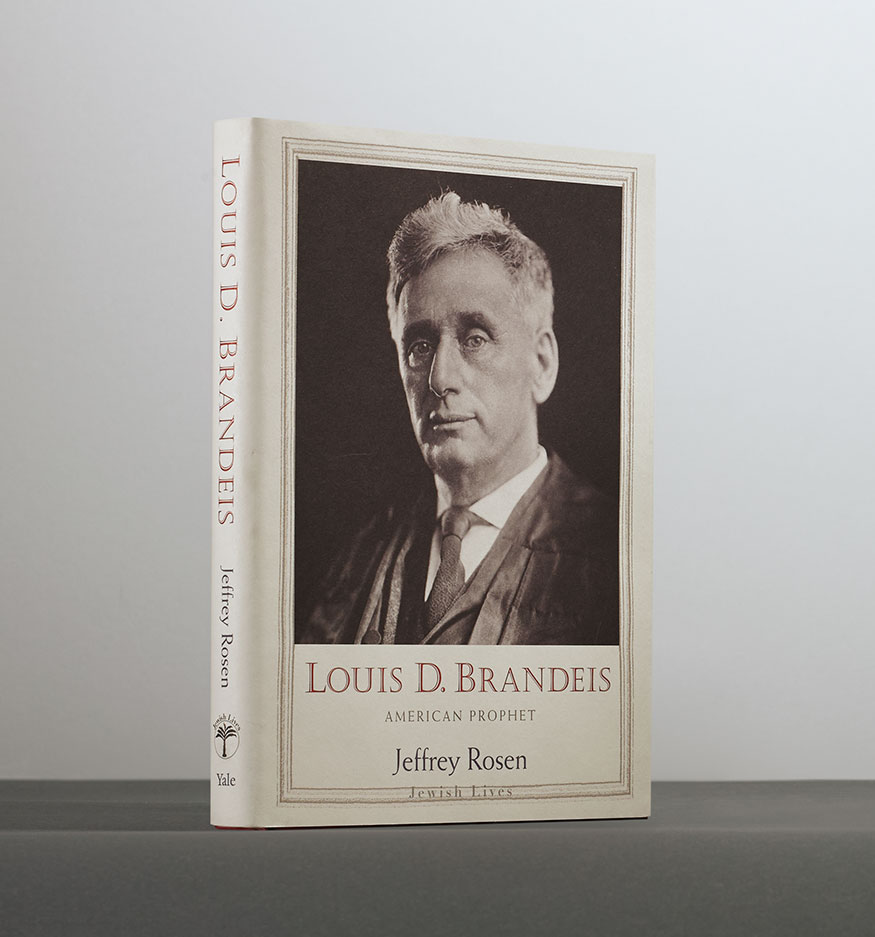
By Jeffrey Rosen
Published June 1, 2016
256 pages
“Compelling” —LA Review of Books
A riveting new examination of the leading progressive justice of his era, published in the centennial year of his confirmation to the U.S. Supreme Court
According to Jeffrey Rosen, Louis D. Brandeis was “the Jewish Jefferson,” the greatest critic of what he called “the curse of bigness,” in business and government, since the author of the Declaration of Independence. Published to commemorate the hundredth anniversary of his Supreme Court confirmation on June 1, 1916, Louis D. Brandeis: American Prophet argues that Brandeis was the most farseeing constitutional philosopher of the twentieth century. In addition to writing the most famous article on the right to privacy, he also wrote the most important Supreme Court opinions about free speech, freedom from government surveillance, and freedom of thought and opinion. And as the leader of the American Zionist movement, he convinced Woodrow Wilson and the British government to recognize a Jewish homeland in Palestine. Combining narrative biography with a passionate argument for why Brandeis matters today, Rosen explores what Brandeis, the Jeffersonian prophet, can teach us about historic and contemporary questions involving the Constitution, monopoly, corporate and federal power, technology, privacy, free speech, and Zionism.

By Vivian Gornick
Published October 4, 2011
160 pages
“Gripping” —The Boston Globe
Emma Goldman is the story of a modern radical who took seriously the idea that inner liberation is the first business of social revolution. Her politics, from beginning to end, was based on resistance to that which thwarted the free development of the inner self. The right to stay alive in one’s senses, to enjoy freedom of thought and speech, to reject the arbitrary use of power—these were key demands in the many public protest movements she helped mount.
Anarchist par excellence, Goldman is one of the memorable political figures of our time, not because of her gift for theory or analysis or even strategy, but because some extraordinary force of life in her burned, without rest or respite, on behalf of human integrity—and she was able to make the thousands of people who, for decades on end, flocked to her lectures, feel intimately connected to the pain inherent in the abuse of that integrity. To hear Emma describe, in language as magnetic as it was illuminating, what the boot felt like on the neck, was to experience the mythic quality of organized oppression. As the women and men in her audience listened to her, the homeliness of their own small lives became invested with a sense of drama that acted as a catalyst for the wild, vagrant hope that things need not always be as they were. All you had to do, she promised, was resist. In time, she herself would become a world-famous symbol for the spirit of resistance to the power of institutional authority over the lone individual.
In Emma Goldman, Vivian Gornick draws a surpassingly intimate and insightful portrait of a woman of heroic proportions whose performance on the stage of history did what Tolstoy said a work of art should do: it made people love life more.
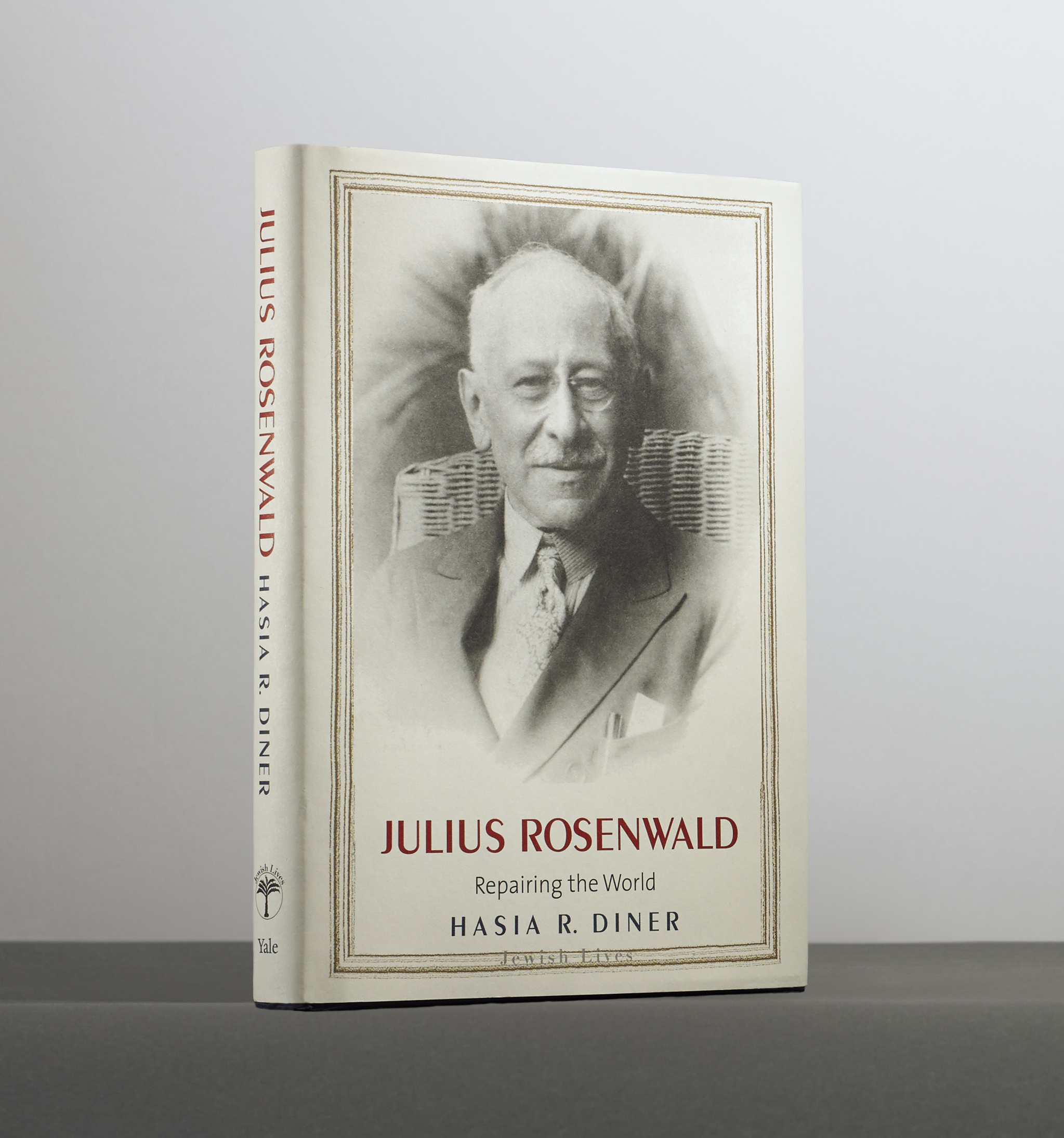
By Hasia R. Diner
Published October 24, 2017
256 pages
“A masterpiece” —David Levering Lewis
The portrait of a humble retail magnate whose visionary ideas about charitable giving transformed the practice of philanthropy in America and beyond
Julius Rosenwald (1862–1932) rose from modest means as the son of a peddler to meteoric wealth at the helm of Sears, Roebuck. Yet his most important legacy stands not upon his business acumen but on the pioneering changes he introduced to the practice of philanthropy. While few now recall Rosenwald’s name—he refused to have it attached to the buildings, projects, or endowments he supported—his passionate support of Jewish and African American causes continues to influence lives to this day.
This biography of Julius Rosenwald explores his attitudes toward his own wealth and his distinct ideas about philanthropy, positing an intimate connection between his Jewish consciousness and his involvement with African Americans. The book shines light on his belief in the importance of giving in the present to make an impact on the future, and on his encouragement of beneficiaries to become partners in community institutions and projects. Rosenwald emerges from the pages as a compassionate man whose generosity and wisdom transformed the practice of philanthropy itself.
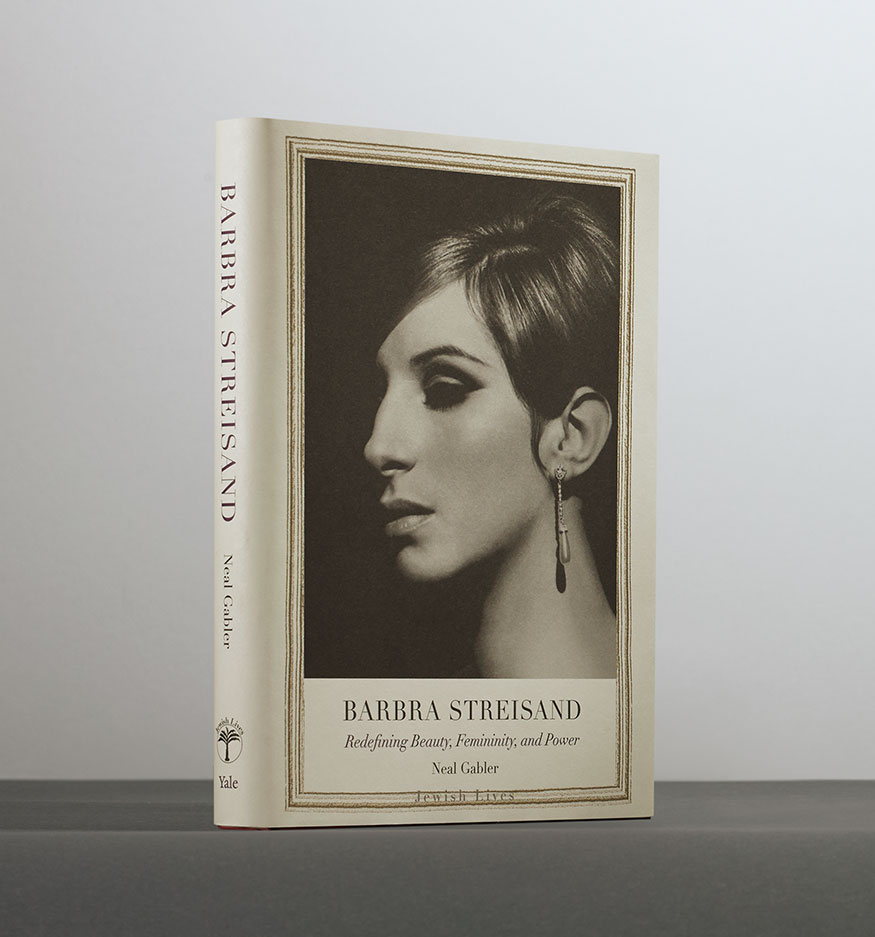
By Neal Gabler
Published April 26, 2016
296 pages
“Fascinating and insightful” —The Wall Street Journal
An enthralling appreciation of the monumentally gifted popular artist and cultural icon who challenged Hollywood’s standards of beauty and glamour
Barbra Streisand has been called the “most successful...talented performer of her generation” by Vanity Fair, and her voice, said pianist Glenn Gould, is “one of the natural wonders of the age.” Streisand scaled the heights of entertainment—from a popular vocalist to a first-rank Broadway star in Funny Girl to an Oscar-winning actress to a producer and director. But she has also become a cultural icon who has transcended show business. To achieve her success, Brooklyn-born Streisand had to overcome tremendous odds, not the least of which was her Jewishness. Dismissed, insulted, even reviled when she embarked on a show business career for acting too Jewish and looking too Jewish, she brilliantly converted her Jewishness into a metaphor for outsiderness that would eventually make her the avenger for anyone who felt marginalized and powerless.
Neal Gabler examines Streisand’s life and career through this prism of otherness—a Jew in a gentile world, a self-proclaimed homely girl in a world of glamour, a kooky girl in a world of convention—and shows how central it was to Streisand’s triumph as one of the voices of her age.
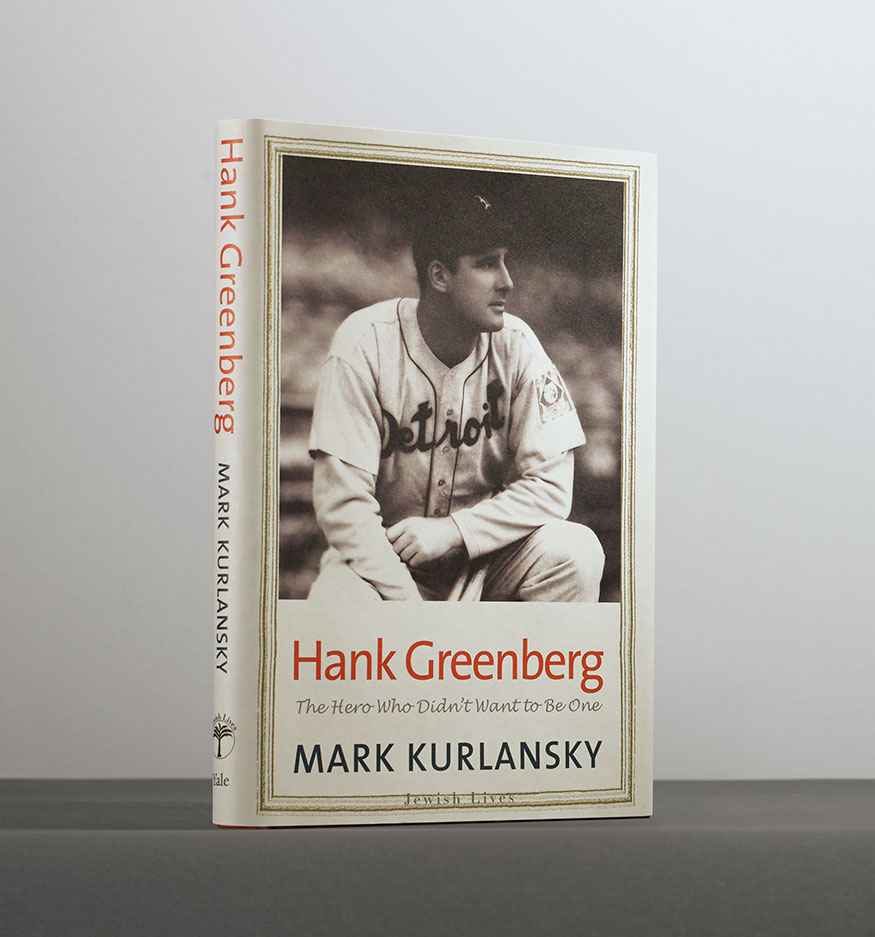
By Mark Kurlansky
Published March 29, 2011
192 pages
“A graceful appreciation” —USA Today
One of the reasons baseball fans so love the sport is that it involves certain physical acts of beauty. And one of the most beautiful sights in the history of baseball was Hank Greenberg's swing. His calmly poised body seemed to have some special set of springs with a trigger release that snapped his arms and swept the bat through the air with the clean speed and strength of a propeller. But what is even more extraordinary than his grace and his power is that in Detroit of 1934, his swing—or its absence—became entwined with American Jewish history. Though Hank Greenberg was one of the first players to challenge Babe Ruth's single-season record of sixty home runs, it was the game Greenberg did not play for which he is best remembered. With his decision to sit out a 1934 game between his Tigers and the New York Yankees because it fell on Yom Kippur, Hank Greenberg became a hero to Jews throughout America. Yet, as Kurlansky writes, he was the quintessential secular Jew, and to celebrate him for his loyalty to religious observance is to ignore who this man was.
In Hank Greenberg Mark Kurlansky explores the truth behind the slugger's legend: his Bronx boyhood, his spectacular discipline as an aspiring ballplayer, the complexity of his decision not to play on Yom Kippur, and the cultural context of virulent anti-Semitism in which his career played out.
What Kurlansky discovers is a man of immense dignity and restraint with a passion for sport who became a great reader—a man, too, who was an inspiration to the young Jackie Robinson, who said, “Class tells. It sticks out all over Mr. Greenberg.”
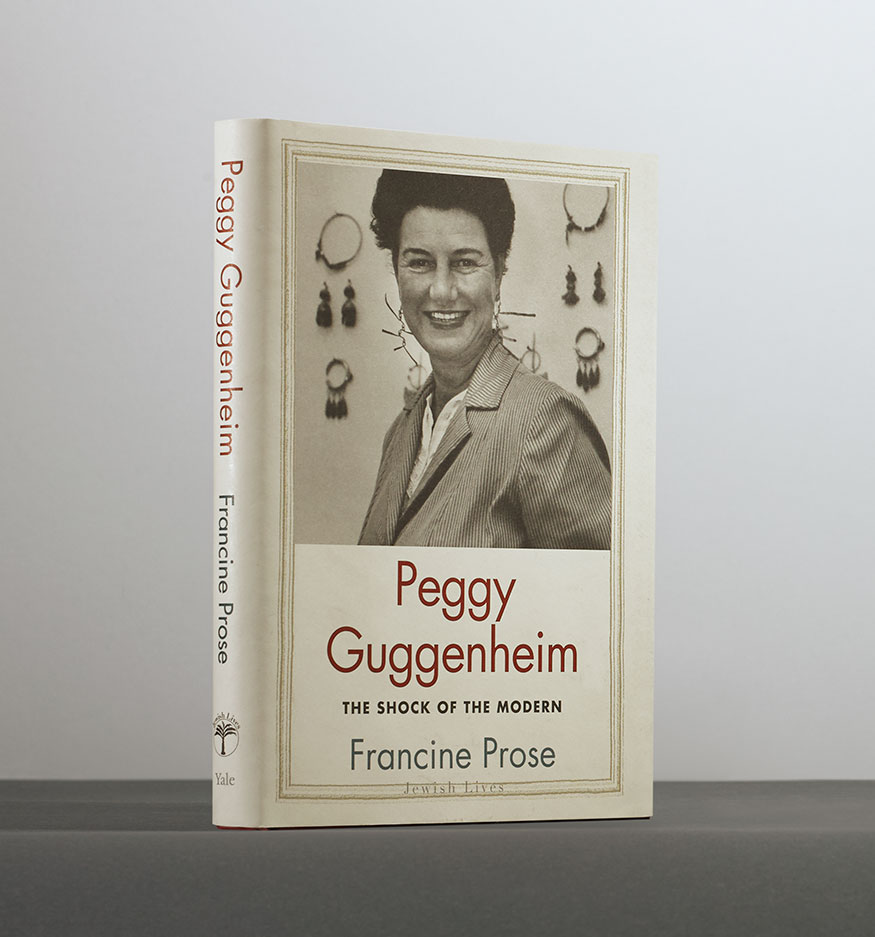
By Francine Prose
Published September 29, 2015
200 pages
“Lively, complex, and inclined to shock.” —Publishers Weekly
A spirited portrait of the colorful, irrepressible, and iconoclastic American collector who fearlessly advanced the cause of modern art
One of twentieth-century America’s most influential patrons of the arts, Peggy Guggenheim (1898–1979) brought to wide public attention the work of such modern masters as Jackson Pollock and Man Ray. In her time, there was no stronger advocate for the groundbreaking and the avant-garde. Her midtown gallery was the acknowledged center of the postwar New York art scene, and her museum on the Grand Canal in Venice remains one of the world’s great collections of modern art. Yet as renowned as she was for the art and artists she so tirelessly championed, Guggenheim was equally famous for her unconventional personal life, and for her ironic, playful desire to shock.
Acclaimed best-selling author Francine Prose offers a singular reading of Guggenheim’s life that will enthrall enthusiasts of twentieth-century art, as well as anyone interested in American and European culture and the interrelationships between them. The lively and insightful narrative follows Guggenheim through virtually every aspect of her extraordinary life, from her unique collecting habits and paradigm-changing discoveries, to her celebrity friendships, failed marriages, and scandalous affairs, and Prose delivers a colorful portrait of a defiantly uncompromising woman who maintained a powerful upper hand in a male-dominated world. Prose also explores the ways in which Guggenheim’s image was filtered through the lens of insidious antisemitism.