Julian Zelizer on the Life and Legacy of Rabbi Abraham Joshua Heschel
Rebecca Keys
“When I marched in Selma, I felt my legs were praying.” From his words spoken in 1965 to this day, Rabbi Abraham Joshua Heschel remains a model of the intersection between religion and progressive politics in mid-twentieth-century America.
Explore Heschel’s early years and foundational influences; the fortuitous opportunity that brought him to the United States to study at Hebrew Union College and teach at the Jewish Theological Seminary; and his lasting legacy that has endured as a symbol of the fight to make progressive Jewish values relevant in the secular world.
Julian E. Zelizer is a professor of history and public affairs at Princeton University. He is the author of numerous books, and has written for CNN.com, the New York Times, and the Washington Post.
This program was hosted by the Park Avenue Synagogue as part of the Reading Jewish Lives book program, and was co-sponsored by American Jewish University.
You can learn more in the new Jewish Lives biography, Abraham Joshua Heschel: A Life of Radical Amazement by Julian E. Zelizer.
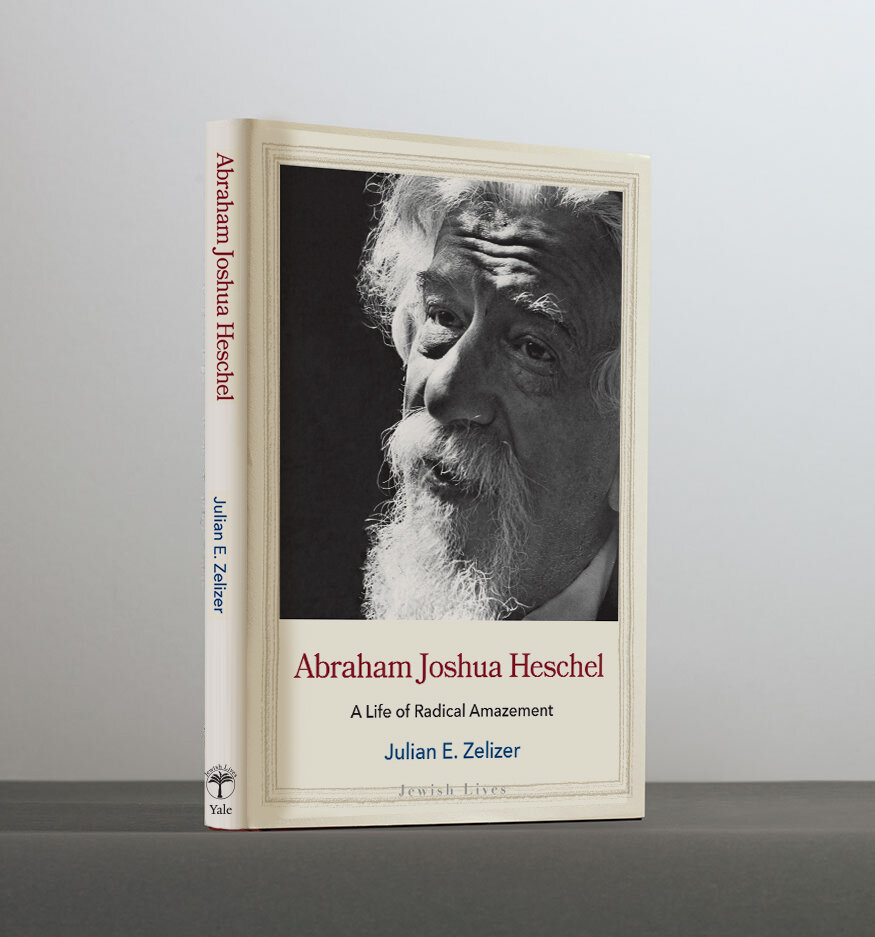
By Julian E. Zelizer
Published October 26, 2021
328 pages
“Elegant” —Rabbi David Wolpe
A biography of the rabbi Abraham Joshua Heschel, who became a symbol of the marriage between religion and social justice
“When I marched in Selma, I felt my legs were praying.” So said Polish-born American rabbi Abraham Joshua Heschel (1907–1972) of his involvement in the 1965 Selma civil rights march alongside Martin Luther King Jr. Heschel, who spoke with a fiery moralistic fervor, dedicated his career to the struggle to improve the human condition through faith. In this new biography, author Julian Zelizer tracks Heschel’s early years and foundational influences—his childhood in Warsaw and early education in Hasidism, his studies in late 1920s and early 1930s Berlin, and the fortuitous opportunity, which brought him to the United States and saved him from the Holocaust, to teach at Hebrew Union College and the Jewish Theological Seminary. This deep and complex portrait places Heschel at the crucial intersection between religion and progressive politics in mid-twentieth-century America. To this day Heschel remains a symbol of the fight to make progressive Jewish values relevant in the secular world.