A Conversation with James Traub: Who is Judah Benjamin?
Rebecca Keys
Judah P. Benjamin (1811–1884) was a brilliant and successful lawyer in New Orleans, and one of the first Jewish members of the U.S. Senate. He then served in the Confederacy as secretary of war and secretary of state, becoming the confidant and alter ego of Jefferson Davis.
In this new biography in the Jewish Lives series at Yale University Press, journalist and scholar James Traub grapples with the difficult truth that Benjamin, who was considered one of the greatest legal minds in the United States, was a slave owner who deployed his oratorical skills in defense of slavery.
This program was hosted by the Center for Jewish History and funded, in part, by public funds from the New York City Department of Cultural Affairs in partnership with the City Council. This event took place on October 20, 2021.
You can learn more in the new Jewish Lives biography Judah Benjamin: Counselor to the Confederacy by James Traub.
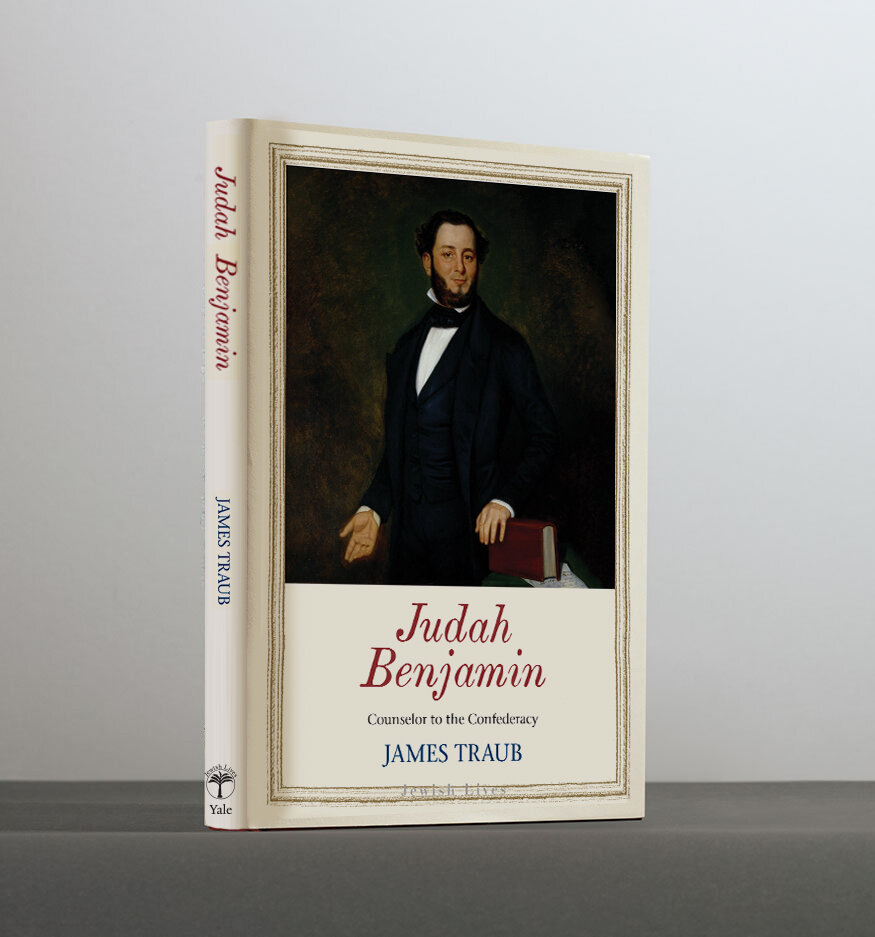
By James Traub
Published October 5, 2021
200 pages
“The best…biography of Benjamin that exists.” —Jonathan Sarna
A moral examination of one of the first Jewish senators, confidante to Jefferson Davis, and champion of the cause of slavery
Judah P. Benjamin (1811–1884) was a brilliant and successful lawyer in New Orleans, and one of the first Jewish members of the U.S. Senate. He then served in the Confederacy as secretary of war and secretary of state, becoming the confidant and alter ego of Jefferson Davis. In this new biography, author James Traub grapples with the difficult truth that Benjamin, who was considered one of the greatest legal minds in the United States, was a slave owner who deployed his oratorical skills in defense of slavery.
How could a man as gifted as Benjamin, knowing that virtually all serious thinkers outside the American South regarded slavery as the most abhorrent of practices, not see that he was complicit with evil? This biography makes a serious moral argument both about Jews who assimilated to Southern society by embracing slave culture and about Benjamin himself, a man of great resourcefulness and resilience who would not, or could not, question the practice on which his own success, and that of the South, was founded.