Hollywood Icons, Legendary Performers
Rebecca Keys
Discover the stage and silver screen with Jewish Lives
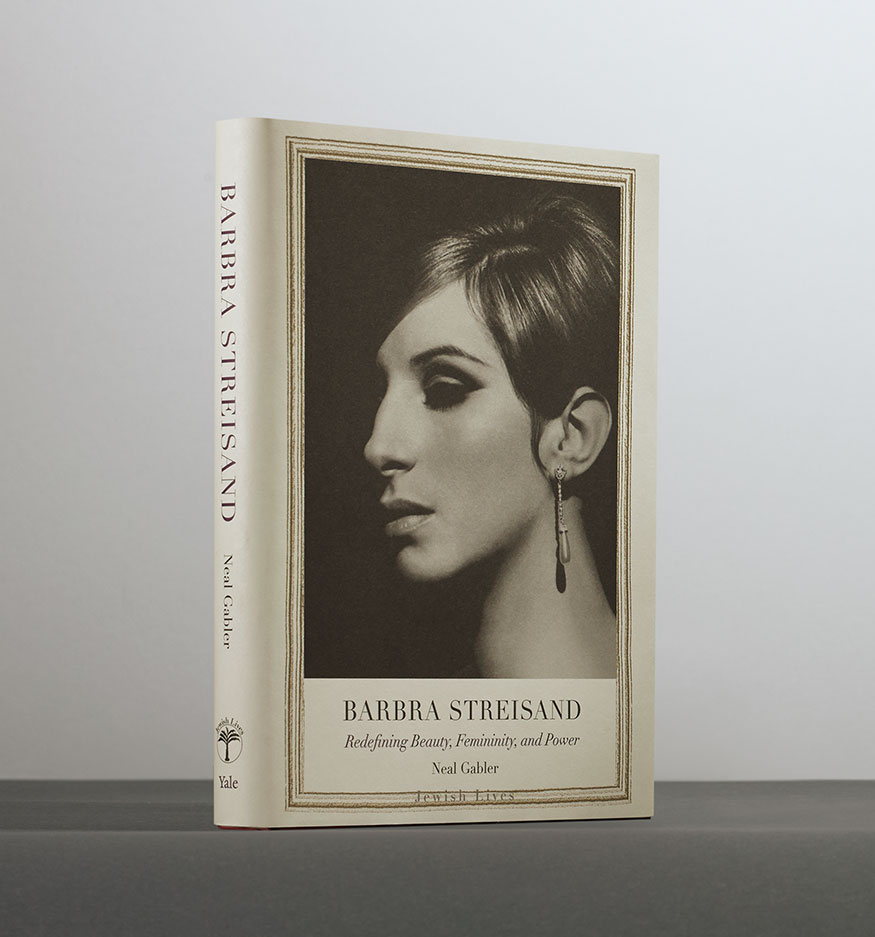
By Neal Gabler
Published April 26, 2016
296 pages
“Fascinating and insightful” —The Wall Street Journal
An enthralling appreciation of the monumentally gifted popular artist and cultural icon who challenged Hollywood’s standards of beauty and glamour
Barbra Streisand has been called the “most successful...talented performer of her generation” by Vanity Fair, and her voice, said pianist Glenn Gould, is “one of the natural wonders of the age.” Streisand scaled the heights of entertainment—from a popular vocalist to a first-rank Broadway star in Funny Girl to an Oscar-winning actress to a producer and director. But she has also become a cultural icon who has transcended show business. To achieve her success, Brooklyn-born Streisand had to overcome tremendous odds, not the least of which was her Jewishness. Dismissed, insulted, even reviled when she embarked on a show business career for acting too Jewish and looking too Jewish, she brilliantly converted her Jewishness into a metaphor for outsiderness that would eventually make her the avenger for anyone who felt marginalized and powerless.
Neal Gabler examines Streisand’s life and career through this prism of otherness—a Jew in a gentile world, a self-proclaimed homely girl in a world of glamour, a kooky girl in a world of convention—and shows how central it was to Streisand’s triumph as one of the voices of her age.

By David Thomson
Published August 8, 2017
232 pages
“Witty and stunningly original” —Jeanine Basinger
Behind the scenes at the legendary Warner Brothers film studio, where four immigrant brothers transformed themselves into the moguls and masters of American fantasy
Warner Bros charts the rise of an unpromising film studio from its shaky beginnings in the early twentieth century through its ascent to the pinnacle of Hollywood influence and popularity. The Warner Brothers—Harry, Albert, Sam, and Jack—arrived in America as unschooled Jewish immigrants, yet they founded a studio that became the smartest, toughest, and most radical in all of Hollywood.
David Thomson provides fascinating and original interpretations of Warner Brothers pictures from the pioneering talkie The Jazz Singer through black-and-white musicals, gangster movies, and such dramatic romances as Casablanca, East of Eden, and Bonnie and Clyde. He recounts the storied exploits of the studio’s larger-than-life stars, among them Al Jolson, James Cagney, Bette Davis, Errol Flynn, Humphrey Bogart, James Dean, Doris Day, and Bugs Bunny. The Warner brothers’ cultural impact was so profound, Thomson writes, that their studio became “one of the enterprises that helped us see there might be an American dream out there.”

By Adina Hoffman
Published February 12, 2019
264 pages
“Electrifying” —Booklist, starred review
A vibrant portrait of one of the most accomplished and prolific American screenwriters, by an award-winning biographer and essayist
He was, according to Pauline Kael, “the greatest American screenwriter.” Jean-Luc Godard called him “a genius” who “invented 80 percent of what is used in Hollywood movies today.” Besides tossing off dozens of now-classic scripts—including Scarface,Twentieth Century, and Notorious—Ben Hecht was known in his day as ace reporter, celebrated playwright, taboo-busting novelist, and the most quick-witted of provocateurs. During World War II, he also emerged as an outspoken crusader for the imperiled Jews of Europe, and later he became a fierce propagandist for pre-1948 Palestine’s Jewish terrorist underground. Whatever the outrage he stirred, this self-declared “child of the century” came to embody much that defined America—especially Jewish America—in his time.
Hecht's fame has dimmed with the decades, but Adina Hoffman’s vivid portrait brings this charismatic and contradictory figure back to life on the page. Hecht was a renaissance man of dazzling sorts, and Hoffman—critically acclaimed biographer, former film critic, and eloquent commentator on Middle Eastern culture and politics—is uniquely suited to capture him in all his modes.
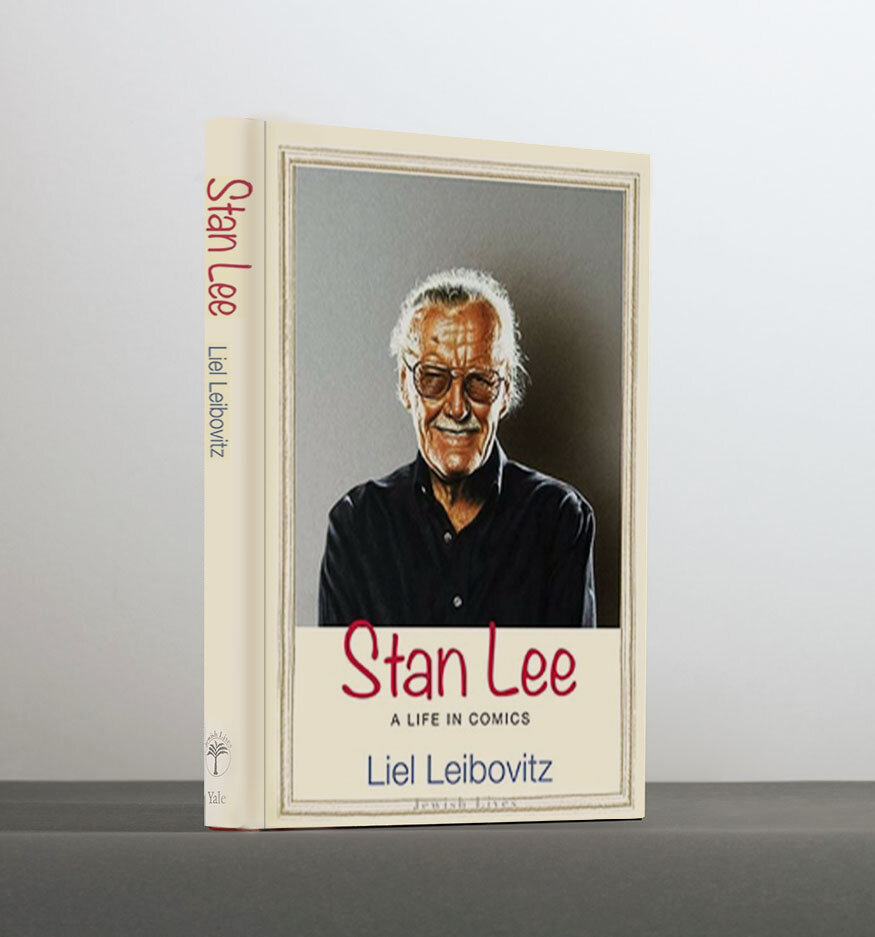
By Liel Leibovitz
Published April 21, 2020
192 pages
“Thoroughly entertaining” —Jeremy Dauber
A meditation on the deeply Jewish and surprisingly spiritual roots of Stan Lee and Marvel Comics
Few artists have had as much of an impact on American popular culture as Stan Lee. The characters he created—Spider-Man and Iron Man, the X-Men and the Fantastic Four—occupy Hollywood’s imagination and production schedules, generate billions at the box office, and come as close as anything we have to a shared American mythology.
This illuminating biography focuses as much on Lee’s ideas as it does on his unlikely rise to stardom. It surveys his cultural and religious upbringing and draws surprising connections between celebrated comic book heroes and the ancient tales of the Bible, the Talmud, and Jewish mysticism. Was Spider-Man just a reincarnation of Cain? Is the Incredible Hulk simply Adam by another name? From close readings of Lee’s work to little-known anecdotes from Marvel’s history, the book paints a portrait of Lee that goes much deeper than one of his signature onscreen cameos.
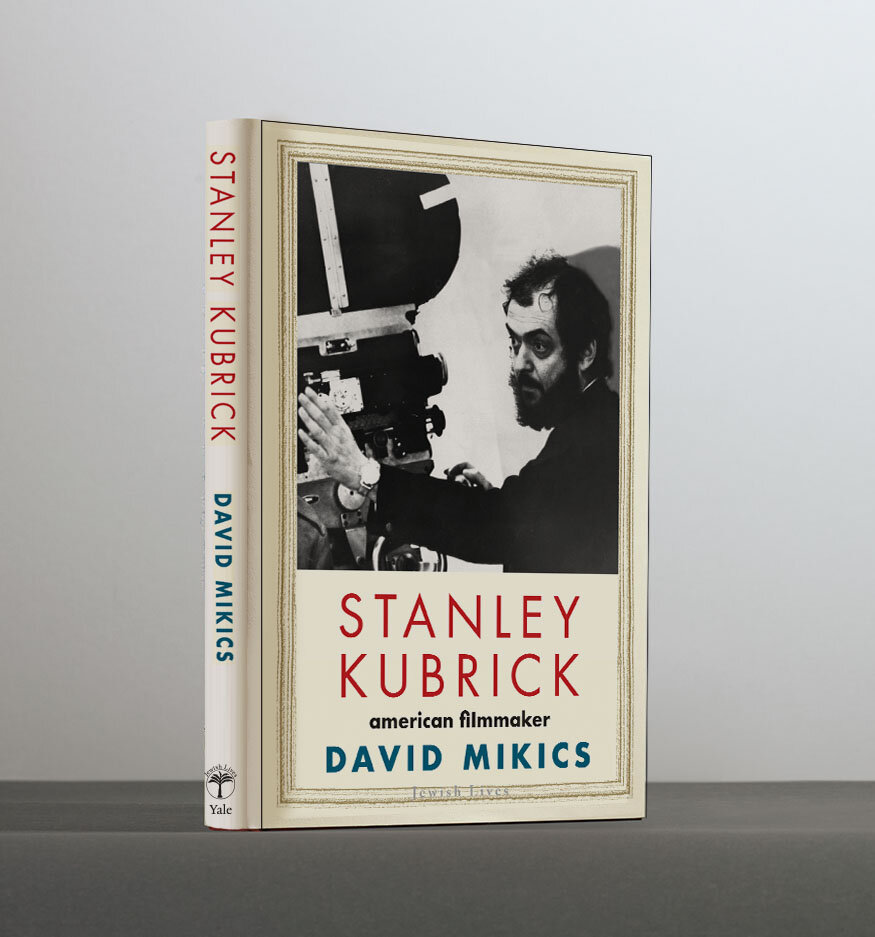
By David Mikics
Published August 18, 2020
248 pages
“A joy to read” —Molly Haskell
An engrossing biography of one of the most influential filmmakers in cinematic history
Kubrick grew up in the Bronx, a doctor’s son. From a young age he was consumed by photography, chess, and, above all else, movies. He was a self-taught filmmaker and self-proclaimed outsider, and his films exist in a unique world of their own outside the Hollywood mainstream. Kubrick’s Jewishness played a crucial role in his idea of himself as an outsider. Obsessed with rebellion against authority, war, and male violence, Kubrick was himself a calm, coolly masterful creator and a talkative, ever-curious polymath immersed in friends and family.
Drawing on interviews and new archival material, Mikics for the first time explores the personal side of Kubrick’s films.
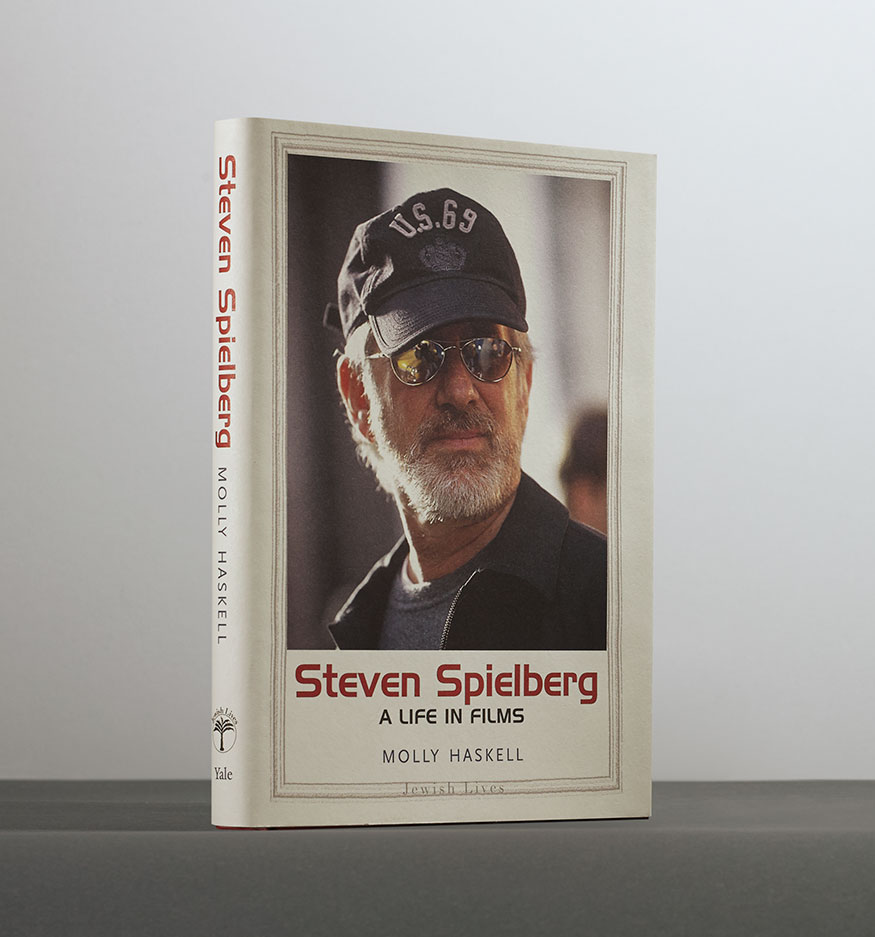
By Molly Haskell
Published January 3, 2017
248 pages
“Uncommonly absorbing” —The New Republic
A film-centric portrait of the extraordinarily gifted movie director whose decades-long influence on American popular culture is unprecedented
“Everything about me is in my films,” Steven Spielberg has said. Taking this as a key to understanding the hugely successful moviemaker, Molly Haskell explores the full range of Spielberg’s works for the light they shine upon the man himself. Through such powerhouse hits as Close Encounters of the Third Kind, E.T., Jurassic Park, and Indiana Jones, to lesser-known masterworks like A.I. and Empire of the Sun, to the haunting Schindler’s List, Haskell shows how Spielberg’s uniquely evocative filmmaking and story-telling reveal the many ways in which his life, work, and times are entwined.
Organizing chapters around specific films, the distinguished critic discusses how Spielberg’s childhood in non-Jewish suburbs, his parents’ traumatic divorce, his return to Judaism upon his son’s birth, and other events echo in his work. She offers a brilliant portrait of the extraordinary director—a fearful boy living through his imagination who grew into a man whose openness, generosity of spirit, and creativity have enchanted audiences for more than 40 years.

By Lee Siegel
Published January 12, 2016
176 pages
“Delightfully perverse” —The New York Times Book Review
A trenchant examination of an iconic American figure that explores the cultural and psychological roots of his comic genius
Born Julius Marx in 1890, the brilliant comic actor who would later be known as Groucho was the most verbal of the famed comedy team, the Marx Brothers, his broad slapstick portrayals elevated by ingenious wordplay and double entendre. In his spirited biography of this beloved American iconoclast, Lee Siegel views the life of Groucho through the lens of his work on stage, screen, and television. The author uncovers the roots of the performer’s outrageous intellectual acuity and hilarious insolence toward convention and authority in Groucho’s early upbringing and Marx family dynamics.
The first critical biography of Groucho Marx to approach his work analytically, this fascinating study draws unique connections between Groucho’s comedy and his life, concentrating primarily on the brothers’ classic films as a means of understanding and appreciating Julius the man. Unlike previous uncritical and mostly reverential biographies, Siegel’s “bio-commentary” makes a distinctive contribution to the field of Groucho studies by attempting to tell the story of his life in terms of his work, and vice versa.
By David Thomson
Published August 8, 2017
232 pages
“Witty and stunningly original” —Jeanine Basinger
Behind the scenes at the legendary Warner Brothers film studio, where four immigrant brothers transformed themselves into the moguls and masters of American fantasy
Warner Bros charts the rise of an unpromising film studio from its shaky beginnings in the early twentieth century through its ascent to the pinnacle of Hollywood influence and popularity. The Warner Brothers—Harry, Albert, Sam, and Jack—arrived in America as unschooled Jewish immigrants, yet they founded a studio that became the smartest, toughest, and most radical in all of Hollywood.
David Thomson provides fascinating and original interpretations of Warner Brothers pictures from the pioneering talkie The Jazz Singer through black-and-white musicals, gangster movies, and such dramatic romances as Casablanca, East of Eden, and Bonnie and Clyde. He recounts the storied exploits of the studio’s larger-than-life stars, among them Al Jolson, James Cagney, Bette Davis, Errol Flynn, Humphrey Bogart, James Dean, Doris Day, and Bugs Bunny. The Warner brothers’ cultural impact was so profound, Thomson writes, that their studio became “one of the enterprises that helped us see there might be an American dream out there.”

Discover the magic of the silver screen with Jewish Lives.
Barbra Streisand: Redefining Beauty, Femininity, and Power
By Neal Gabler
“Fascinating and insightful” —The Wall Street Journal
An enthralling appreciation of the monumentally gifted popular artist and cultural icon who challenged Hollywood’s standards of beauty and glamour
Warner Bros: The Making of an American Movie Studio
By David Thomson
“Witty and stunningly original” —Jeanine Basinger, author of The Star Machine
Behind the scenes at the legendary Warner Brothers film studio, where four immigrant brothers transformed themselves into the moguls and masters of American fantasy
Groucho Marx: The Comedy of Existence
By Lee Siegel
“Delightfully perverse” —The New York Times Book Review
A trenchant examination of an iconic American figure that explores the cultural and psychological roots of his comic genius
Stanley Kubrick: American Filmmaker
By David Mikics
“A joy to read” —Molly Haskell, author of Steven Spielberg: A Life in Films
An engrossing biography of one of the most influential filmmakers in cinematic history
Ben Hecht: Fighting words, Moving Pictures
By Adina Hoffman
“Electrifying” —Booklist, starred review
A vibrant portrait of one of the most accomplished and prolific American screenwriters, by an award-winning biographer and essayist
Steven Spielberg: A Life in Films
By Molly Haskell
“Uncommonly absorbing” —The New Republic
A film-centric portrait of the extraordinarily gifted movie director whose decades-long influence on American popular culture is unprecedented
Mel Brooks: Disobedient Jew
By Jeremy Dauber
“Entertaining and enlightening” —Kenneth Turan, author of Not to Be Missed: Fifty-Four Favorites from a Lifetime of Film
A spirited dive into the life and career of a performer, writer, and director who dominated twentieth-century American comedy